Best Casino App in the UK: What to Check
 Available in GB
A practical look at how casino apps work on phones, from account access and game play to payments, bonus conditions and safeguards.

Table of Contents
- What a Casino App Actually Adds to Mobile Play
- Online Casino Access: App or Mobile Browser?
- Real-Money Play, Withdrawals and the Conditions That Matter
- Slot Apps: How the Spins Work
- Casino Games on a Phone: What the App Can Deliver
- Free Spins and Bonus Terms: Read the Small Print
- Casino Apps on Android: The Practical Setup
- UK Casino Apps: Licensing and Player Safeguards
- Live Dealer Games on Mobile: The App Experience
- iOS, Bingo and Deposits: Paying on a Phone
What a Casino App Actually Adds to Mobile Play
The word “app” can describe more than one thing. It may mean a program built for a phone, a lightweight container that displays the casino’s mobile site, or simply the operator’s shortcut to its service. Those arrangements can look similar on screen while behaving differently underneath. The distinction matters because installing an icon does not, by itself, change what the casino offers or how the account works.
I have found it useful to separate two questions: how the service is reached, and what the installed software adds. The casino account remains the centre of the experience. An app is an access layer around it: a familiar icon, a screen designed for a handset, and, depending on its construction, a different route for displaying games and account pages. It is not a separate kind of gambling.
That makes “best” a slippery word when applied to casino apps. A polished icon or a store listing says little about whether the app improves everyday use. The practical test is whether it makes routine tasks clearer and more consistent without getting in the way. On a small screen, that may come down to readable menus, sensible spacing, and controls that respond predictably. Those are interface qualities, not proof of better odds, better games, or a different account.
An installed app is not one particular technology
A native app is built to run as software on the phone. Some casino apps instead use a WebView: a built-in component that loads web content inside an app-shaped frame. To the user, both may open from an icon and fill the screen. But the frame does not tell the whole story. The underlying implementation can affect how quickly an interface reacts and how smoothly it moves between its parts.
Foreign Casinos for UK Players: Licensing and Risks
A specialist review reported a sharp contrast in one comparison: a native wrapper’s spin control reacted at the moment of touch, while a WebView embed showed a noticeable half-second delay. That is a report about the implementations reviewed, not a universal timing guarantee for every casino app. Still, it illustrates why “downloadable” is not a useful performance label on its own. A wrapper can feel close to a dedicated program while relying heavily on web content.
The delay is small in clock time, but it is easy to notice when an interface invites repeated taps. A button that seems slow can make the whole product feel less precise; a responsive one can make the same screen feel more deliberate. I would treat that as a matter of interaction, not as evidence that one app is inherently safer or more rewarding. Different claims require different checks.
There is also a trade-off in how much an app needs to do. A focused interface can make frequent account actions easier to find, while an app that mostly reproduces a website may add another place to sign in without adding much practical value. Updates can alter the experience, too. The version installed on a phone and the service delivered by the operator are related, but they are not identical pieces of the system.
Convenience, without the mystique
A dedicated icon can reduce the friction of returning to a service. The app may open directly into a mobile layout rather than asking the user to find the site again. It can also keep the casino visually distinct from other pages on the phone. These are modest conveniences, but they are the ones an app can reasonably be judged on. They do not turn access into a different product.
Offshore Casino Sites in the UK: Licensing and Risks
Nor does an app label establish that every screen is truly native. Some pages may be rendered using embedded web content, and the user may have little visual clue where that boundary sits. From an industry perspective, the commercial advantage is straightforward: an app gives the operator a persistent place on the customer’s device. The customer’s advantage depends on whether that presence makes the service easier to use. Presence alone is not quality.
I have seen the word “seamless” used for experiences that simply remove one visible step while leaving the underlying process unchanged. That is why I look for practical differences rather than promotional language: does the layout suit the phone, do controls respond as expected, and does the app behave consistently when moving between screens? If those details are weak, the icon does not rescue the experience.
For a UK reader comparing casino apps, the useful starting point is therefore modest. An app can package access neatly and may feel more responsive, but its name, store page, or appearance cannot answer every question about the service behind it. The distinction between native software and an embedded web experience explains part of the feel; it does not, by itself, settle whether an app is the right route.
The label is only the wrapper.
Online Casino Access: App or Mobile Browser?
An installed casino app is only one route into mobile gambling. On a phone, a casino can also be opened in a browser, with the site adapting its layout to a smaller screen. Most UKGC-licensed casinos offer instant play this way, so an app download is not a prerequisite for reaching the games or managing an account.
That distinction matters because “app” is often used loosely. It can mean a dedicated application downloaded to a device, but it can also be shorthand for the casino’s mobile service as a whole. In practical terms, the browser route starts with the casino’s website: the page loads, the customer signs in, and the mobile version presents the available account and play features. The underlying service is still the casino’s online platform.
Offshore Casinos for UK Players: Legal Status & Risks
I used to treat an app icon as evidence that a casino had built something more substantial for mobile. That is not a safe assumption. An icon tells little about how the service is delivered or whether the same account and content are available in a browser. The more useful question is whether the mobile site works properly for the task at hand. An app may suit someone who prefers a permanent shortcut; a browser can be enough for occasional access and avoids adding another installation.
The browser is also a straightforward way to assess a casino before committing to an app. The site can be opened from a saved bookmark, and its pages can be checked without first finding and installing software. That makes the route useful for seeing how the casino handles its account area and whether its mobile layout is readable. It does not, by itself, tell anything about the operator’s legal status.
For UK players, that legal distinction is not optional. Online casino gambling is legal in the UK when it takes place through a properly licensed and regulated site. Operators offering real-money gambling to customers in Great Britain must hold the relevant UK Gambling Commission licence, whether the operator is based in Britain or elsewhere. A website being accessible on a phone does not make it a legal UK casino, and an app being available for download does not establish that either.
This is where the language used in promotions can blur separate issues. “Mobile casino” describes a way of accessing the service; it is not a licence category. “Instant play” describes access without installing a dedicated app; it does not certify the operator. The device and delivery method are one question. The operator’s permission to serve the British market is another.
Licensing
Real-money gambling in Great Britain is only legal through operators holding a valid UK Gambling Commission licence.
In day-to-day use, browser access follows a simple pattern: open the casino’s mobile site, sign in, and continue through the available pages. A well-adapted site keeps its navigation usable on a touch screen and arranges account information for a narrow display. The browser remains part of that experience, however. Pages are opened within it rather than from a standalone application, and leaving the site means returning through the browser or a saved shortcut.
That can be an advantage rather than a compromise. There is no need to decide in advance that a particular casino deserves space on the phone. Browser access also keeps the distinction clear between visiting a website and installing software. Some people prefer the app icon and a more direct entry point; others want to avoid extra downloads. Neither preference changes the account’s relationship with the casino.
A saved link can make a browser-based casino feel app-like, but it remains a shortcut to the website. It does not turn the site into an independent service or change the rules that apply to the operator. I have seen that small difference cause confusion: people judge a casino by how polished its phone access looks, when polish is not proof of authorisation. Presentation is not permission.
For anyone comparing an online casino app with browser access, the sensible comparison is therefore not “real casino” against “lesser version”. Both routes may lead to the same online account, while the browser option can provide instant play without an installation. The key practical difference is how the service is reached; the key legal question is whether the operator is licensed to offer gambling to customers in the UK.
Non-UK Registered Casinos: Regulation and Risks
The browser route is not a loophole around regulation, nor is an app a substitute for checking an operator’s status. A licensed casino can offer mobile access through its website, an app, or both. Access is simple. Legality is separate.
Real-Money Play, Withdrawals and the Conditions That Matter
A real-money casino app is judged at the point a balance leaves the account, not when a withdrawal button first appears. The request may be submitted quickly, but that does not mean the money has reached a bank or e-wallet. There can be an operator’s processing stage followed by the payment provider’s own handling time. Those are separate parts of the journey, and the displayed status may not make the distinction clear.
I read any published timing as a description of a particular operator or a snapshot, not a promise that applies across real-money casino apps. One specialist review recorded a PayPal withdrawal in two hours, while the bank transfers it examined took three to five business days and debit-card withdrawals took one to three business days. Those observations show why the payment route matters; they do not establish a timetable for every casino or account. A separate specialist assessment placed the realistic benchmark for e-wallet withdrawals at UK-licensed operators below 24 hours. That, too, is an assessment rather than a guaranteed service level.
The useful comparison is therefore not simply “fast” against “slow”. It is whether the published terms explain when processing begins, what checks can hold up a request and which payment method receives the money. A delay may relate to the operator reviewing a withdrawal, or to the payment provider completing it after release. Without that distinction, a headline time can make the process sound simpler than it is. Small print matters.
Withdrawal Timings
Payment speeds vary by method; e-wallet withdrawals at UK-licensed operators are often below 24 hours, while bank transfers can take three to five business days.
The withdrawal route often follows the deposit route
The method used to fund an account is almost always the method that must also be used for a withdrawal. This is why the payment choice made earlier can shape the exit route later. Where more than one method has been used, the operator’s cashier terms may set out how withdrawals are allocated. It is worth checking those rules before treating a listed alternative as an available payout option.
The requirement is not merely an interface quirk. Payment methods have different processing paths, and an operator may need to confirm that the account and the payment destination match. In practice, a casino app real-money balance is not the same thing as money already received: it remains subject to the operator’s withdrawal process and the relevant payment channel.
I would also separate a requested withdrawal from a completed one. The former records an instruction; the latter means the funds have passed through the operator and payment provider. That distinction is especially important when comparing timings from different operators, because one may quote its own processing stage while another describes the full period until receipt.
A request should not be quietly undone
Once a withdrawal has been requested, a UK-licensed operator must not reverse it unless the customer actively consents. That protection matters because returning a pending payout to the casino balance changes the decision: the money is once again available for play. A cancel option is not the same as permission for an operator to restore funds without consent.
International Casinos for UK Players: What to Check
I regard this as a practical test of how clearly the app handles a payout. The request should remain a request unless the account holder chooses otherwise. If a transaction is pending, the status and any action required should be understandable, rather than making cancellation look like an automatic part of processing. No silent reset.
Caps and larger balances
A single withdrawal may be subject to a maximum amount, separate from the account balance. A specialist review of UK mobile casinos reported single-transaction caps ranging from £10,000 to £50,000. These are reported figures from a review, not a fixed rule for every operator; the applicable limit needs to be checked in the casino’s own terms.
The cap can affect how a large payout is delivered. A specialist review reported that amounts above the standard cap are paid in instalments over 12 to 36 months. That is a substantial difference from receiving the full amount as one transfer, so the instalment clause deserves attention before play begins, not after a balance has accumulated. The wording should make clear how the cap applies and what schedule governs any staged payments.
When comparing a real-money casino app in the UK, I would put withdrawal method, processing explanation, reversal policy and payout cap alongside the games and interface. A smooth app can make the account easy to use, but it cannot remove the payment route or the operator’s stated limits. The withdrawal terms are part of the product. Check them before they matter.
Withdrawal Essentials
- Use the same method for withdrawals as was used for deposits
- Verify the operator’s processing times and payment provider delays
- Check for single-transaction caps and instalment clauses for large balances
- Ensure the operator does not reverse requested payouts without consent
Slot Apps: How the Spins Work
A slot on a phone may look like a simple loop: choose a stake, press the button and watch the reels stop. In Britain, that loop has limits. The most visible are that an online slot spin must take at least 2.5 seconds and autoplay is not allowed. Those rules apply to the play itself, not just to a particular app’s settings.
The minimum duration means a result cannot be presented as though the next spin is ready immediately after the last one. The game needs to complete the required interval before another spin can begin. A quick tap does not make the reels settle faster, and rapid repeated input cannot turn the game into a continuous sequence of automated rounds. There is a pause built into the rhythm.
Autoplay would normally let a player set a number of spins and have them run without pressing the spin control each time. That feature is banned for online slots in Britain. Each new round requires a deliberate action. It is a small interaction, but it changes the pace: the player has to return to the control between results rather than letting the game continue unattended.
I have seen the absence of autoplay treated as a minor interface detail. It is more useful to understand it as part of how the product is permitted to work. A screen may still show a prominent spin button, sound effects and animated reels, but those design choices do not remove the need for a fresh action or the minimum time between rounds. The animation is presentation; the rule governs the round.
The stake is another part of the slot’s mechanics. Online slots in Britain have maximum stakes that depend on the player’s age: the stated cap is £5 per game cycle for customers aged 25 and over, and £2 for those aged 18 to 24. The lower limit for younger adults is a regulatory distinction, not a setting that an app can override. A stake control may offer several amounts, but the permitted ceiling still applies.
Casino sites not registered with GamStop in the UK
That matters when moving between games or changing a stake. The amount selected for one round is not simply a visual preference; it determines what is put at risk in that cycle. I treat the stake display as a control to check before each play, rather than assuming the game has carried over the intended amount. Small screens can make controls feel crowded, and a prominent button does not make the surrounding information irrelevant.
A “fast” slot, in this context, should not be read as permission for faster-than-rules play. The app can make the controls easy to reach and the outcome easy to see, but it cannot remove the required interval or automate successive spins. Nor does a quicker-looking animation change the underlying timing requirement.
The practical test is plain: one spin is initiated, its result is shown, and another must be started intentionally after the required interval. There is no unattended run of rounds. That is the shape of legal online slot play in Britain, whether the screen is branded as a slot machine app or presented as a mobile slot. The pace is constrained. The button remains yours.
Casino Games on a Phone: What the App Can Deliver
A casino app is only as useful as the games it can actually run. The label “mobile casino games” describes the format, not a guaranteed catalogue: availability depends on what the operator has added and whether each title is presented for a phone-sized screen. A large desktop library does not automatically mean every title is ready to play on mobile.
The difference becomes clear in the way a game is laid out. On a phone, controls and information need to fit within a compact display without being obscured by the interface. Some games are designed to adapt their layout to the screen; others may feel cramped or be absent from the mobile selection altogether. I treat that as a delivery question, not a matter of how many titles an app advertises.
Online casino payouts in the UK: how RTP works
A useful example is Big Bass Bonanza Megaways. The slot was released in desktop and mobile versions on 18 November 2023. That gives a concrete illustration of a title being made available across both formats, rather than assuming a mobile version will follow simply because a desktop game exists. It does not, by itself, say anything about the breadth of a particular casino app’s catalogue.
When comparing casino games on a phone, the practical checks are straightforward: whether the desired category appears in the mobile lobby, whether the title opens properly on the handset, and whether its controls remain legible once the game is running. A provider’s release in both formats is one part of the picture; the operator still has to carry the game and make it accessible through its mobile product.
The phrase “best casino game app” can suggest that one app has the definitive collection. In practice, the more useful distinction is between range and fit. One app may offer a wider choice, while another may present its available games more clearly on a small screen. Neither claim can be inferred from the word “app” alone.
That matters especially when a familiar title is the reason for choosing a mobile casino. Its presence on desktop is not proof that it appears in the phone catalogue, and a mobile release is not proof that every operator carries it. Check the actual mobile selection. The label is not the catalogue.
Recommended online casinos
- NightLuckBonus: Welcome Pack + 805% Up To 6400€ + 280 FS · Payout speed: 1-3 business days
- SlotoSportBonus: 500% up to £ 10 200+ 777 FS · Payout speed: 1-3 business days
- SpinFormulaBonus: 550% Up To £15,000 + 550 FS · Payout speed: 1-3 business days
- x3betBonus: Welcome Pack 100% Up to £1.000 + 200 Free Spins · Payout speed: 1-3 business days
- Revery PlayBonus: 100% up to€1,000+ 100 FS · Payout speed: 1-3 business days
- ZombillionBonus: Welcome Pack 250% up to £4000 + 200 FS · Payout speed: 1-3 business days
- ChanzeBonus: Slots Welcome Bonus #1 200% up to €500 · Payout speed: 1-3 business days
Free Spins and Bonus Terms: Read the Small Print
A free-spin offer is not simply a set of spins with cash value attached. The winnings may be credited as bonus funds, and the terms decide whether those funds can become withdrawable cash. I have seen the headline offer do the selling while the conditions determine what a player can actually keep.
The first check is the wagering requirement: the amount of eligible play required before bonus winnings can be withdrawn. Specialist reviews describe requirements in the range of 35x to 40x the bonus amount, but the wording matters. A requirement may apply to the bonus alone or to the bonus plus a qualifying deposit. Those are different calculations, even when the promotional banner looks similar.
Do
- Check the wagering requirements (e.g., 35x to 40x)
- Verify the expiry window for bonus funds
- Review the cashout caps on winnings
Don’t
- Assume all games contribute fully to wagering
- Exceed the maximum bet limit while using bonus funds
- Rely on the promotional banner instead of the full terms
Time is the next constraint. Specialist reviews report wagering windows of 7 to 14 days for some offers, while others allow only 72 hours. The clock can make an apparently generous casino app free bonus difficult to use, particularly if eligible games contribute slowly. If the deadline passes, the operator may remove the remaining bonus and related winnings under the stated terms. Short deadline. Less room to play.
Game weighting also affects the calculation. A game can contribute less than its full stake towards wagering, or be excluded from the offer. That means the balance may move without the requirement falling at the same pace. Maximum bet limits matter for the same reason: exceeding the permitted stake while bonus funds are active can put the offer at risk.
A cashout cap is separate from wagering. Specialist reviews report caps of £100 to £200 on many bonuses, but the operator’s terms determine the actual limit. Completing the wagering requirement does not override a cap; winnings above it may not be payable as cash. Read the cap alongside the eligible games, expiry and maximum bet, rather than treating it as a minor footnote.
That distinction is useful when comparing free spins in a casino app with an offer described as a free slot app promotion. The number of spins is only one part of the value. What counts as winnings, how those winnings must be wagered, and what can ultimately be cashed out are the operative terms.
I would treat “free” as a description of how the spins are awarded, not as a promise that any resulting balance is unrestricted. The same applies to roulette or other games named in a promotion: eligibility and contribution depend on the offer’s rules. Read the terms attached to that specific offer. The banner is not the contract.
Online Casino No Registration UK: What Checks Apply
Casino Apps on Android: The Practical Setup
An Android casino app is not necessarily a game built specifically for Android. The label can describe a native app, or a lightweight shell that opens much of the casino’s mobile site inside an embedded browser. Both can put the same account and games on a home screen, but the underlying build affects how the interface feels.
In a native wrapper, the app is designed to work with the phone’s operating system. A WebView version instead displays web content within the app. That distinction is easy to miss in a store listing, and it matters most during repeated interactions: opening a game, moving between screens and responding to a tap. The app icon alone says little about which implementation is underneath.
One specialist review reported an immediate response from the spin button in a native wrapper, while a WebView embed showed a noticeable half-second delay. That is an observation from a particular review, not a result that applies to every Android casino app. Network conditions, the phone and the game itself can also affect the experience. Still, the comparison captures the practical trade-off: an app may feel like a dedicated product while behaving much like a website inside a frame.
I have found it more useful to judge an Android casino app by how consistently it handles ordinary tasks than by its store description. Does the account area remain legible when the screen changes orientation? Do menus and game controls respond without requiring repeated taps? Does returning from a game leave the app where it was, or send the user back through the lobby? These are usability checks, not evidence that one operator is universally the best casino app for Android.
Android App Implementations
A native wrapper is designed to work with the phone’s operating system, potentially offering more immediate responses. A WebView version displays web content within an app frame, which may result in noticeable delays, such as a half-second lag on spin controls.
The same distinction matters for playing on the go. A compact interface can make an app feel convenient, but convenience is not the same as responsiveness. A polished native wrapper may be more immediate; a WebView-based app can still provide access to the same casino content, with a different feel at the controls.
Android app listings and implementations can change, so a recommendation based only on an app’s name can age quickly. The useful question is not whether an app is called native, but whether its actual screens behave cleanly on the device in use. Implementation shows through.
UK Casino Apps: Licensing and Player Safeguards
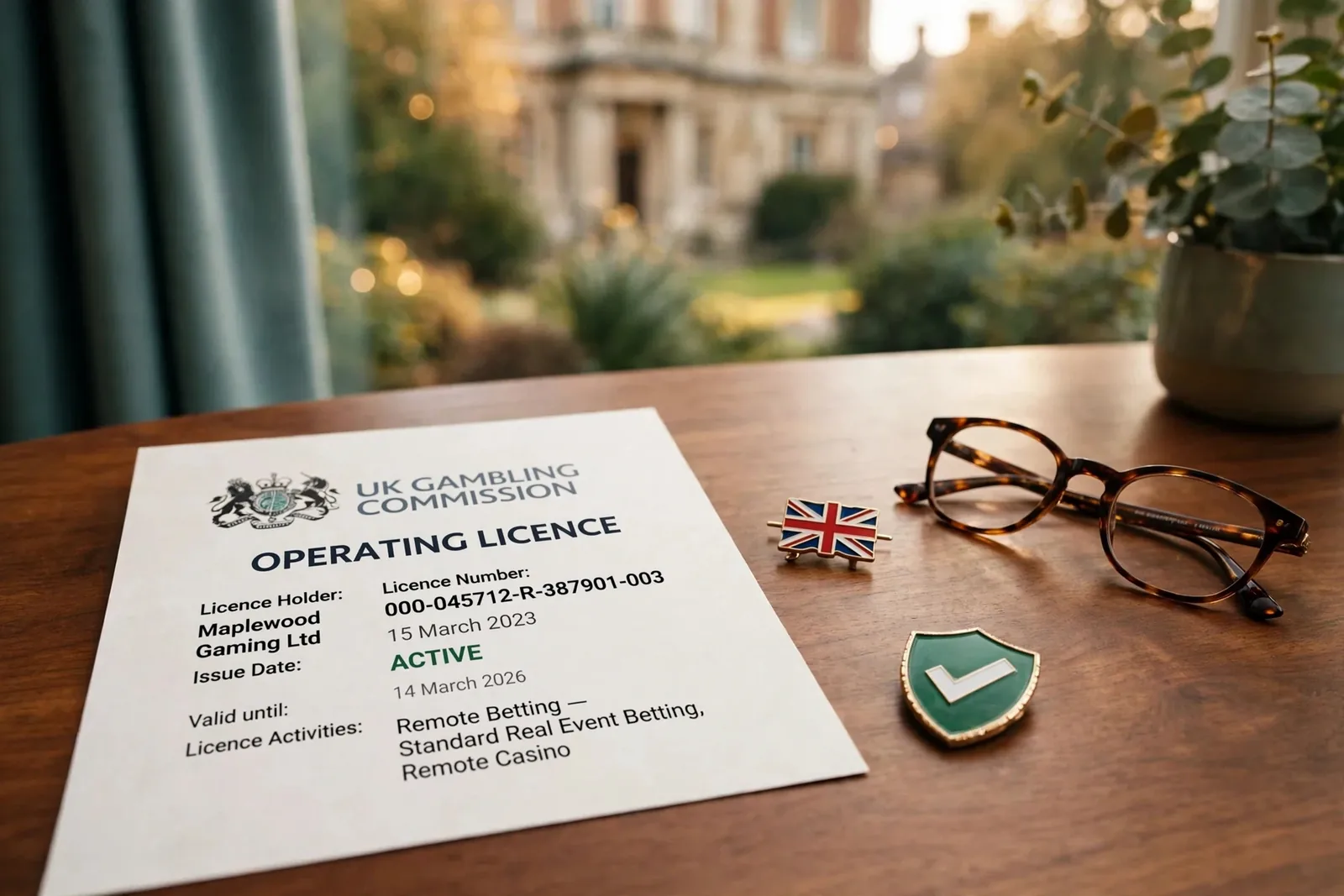
A polished casino app is not evidence that its operator is authorised to serve players in the UK. The licence is the more important check. For real-money gambling, operators serving the British market need permission from the UK Gambling Commission, wherever the business itself is based. A UKGC licence is the strongest consumer protection available in this market because it places the operator within the local regulatory system.
Trusted UK Casino: Licence and Trust Checks
I have seen app design do a lot of persuasive work: a clean lobby can make an operator feel established before the basic checks have been made. The licence number is usually displayed at the bottom of the casino’s homepage. It can then be checked against the UKGC register, rather than taken on trust from a badge or a claim in an advert. The operator name and licence details should match; a mismatch is a reason to stop and check further.
The licence matters beyond the initial sign-up. UK-licensed operators must provide account controls, including a way to set deposit limits. Those limits can be set for a daily, weekly or monthly period in account settings. The point is practical: a limit records a boundary before deposits are made, rather than leaving the account with no built-in control. New customers must also be prompted to set a financial limit before their first deposit, and the controls must remain accessible at account level.
Age checks are another part of the process. Operators must verify a customer’s age before allowing a deposit into a gambling account; the legal minimum for online gambling with a UKGC-licensed operator is 18. A registration screen that moves quickly is not a substitute for that verification.
“Safe” is an advertising word, not a guarantee that every product or decision carries no risk. In my experience, the useful distinction is whether the operator is accountable to the UK regulator and whether its controls are visible and usable. A licence does not make a casino app suitable for everyone, but it gives players a recognised route for oversight that an unlicensed service does not provide.
This site may receive payment if a reader follows one of its links and makes a deposit. That commercial relationship does not replace the licence check: the operator’s current status is what matters.
Live Dealer Games on Mobile: The App Experience
Live dealer play is a different test of a mobile casino from opening a standard game. The table is streamed, the dealer and other activity are on screen, and decisions happen while that feed is running. A small delay or awkward layout is more noticeable than it is in a game that can be played at an individual pace.
A dedicated live dealer casino app is not essential. Most UKGC-licensed casinos allow instant play in a mobile browser, so live tables may be accessible without installing anything. The practical difference is how the casino is delivered and how well its controls fit the phone. Browser access can be the simpler route; an app may keep the casino close at hand, but its label alone says little about performance.
I have seen “native app” used as if it were a performance guarantee. It is not. A specialist review reported that a native wrapper’s spin control responded immediately to touch, while a WebView embed showed a noticeable half-second delay. That observation concerns a particular comparison, not every app or live table. For live play, the relevant point is that a wrapper can still contain web-based elements, so the installation itself does not establish how responsive the stream or controls will feel.
The better assessment is practical: whether the table fits the display, whether controls remain easy to reach, and whether the feed stays usable while the phone is held normally. Responsiveness is only one part of the experience. A fast button cannot compensate for a stream that stutters, and a polished interface cannot make an unstable connection reliable.
That is the distinction behind searches for the fastest casino app or the best live dealer experience in the UK. There is no meaningful winner based on the word “app” alone. Browser-based play may work just as well for a particular casino, while an installed version may feel more integrated. I would compare the actual live-table experience rather than assume that downloading an app makes it better. The delivery matters.
iOS, Bingo and Deposits: Paying on a Phone
On an iPhone or iPad, the payment screen matters more than the label on the app. An iOS casino app and a casino bingo app may present different games, but deposits still depend on the methods the operator supports and the checks attached to the account. Installing an app does not itself put money into a balance.
A specialist review of tested apps reported that Apple Pay deposits were completed instantly with two taps. That is a result from those tests, not a promise about every app or every bank. A specialist review also described debit-card deposits as generally instant, while noting that a bank may flag a gambling transaction. Credit cards cannot be used for gambling deposits in the UK; that restriction also covers wallet payments funded by a credit card.
Deposit minimums are not uniform. One specialist review reported a £5 minimum at most apps it examined, with some accepting £2. The amount shown in the payment window is the useful figure: an app’s marketing page may not make the operator’s current minimum clear.
Pay by Phone works differently from Apple Pay or a debit card. The charge is added to the next mobile phone bill or taken from prepaid credit, rather than appearing as a card payment. A specialist review reported a £30 per-transaction cap at most operators it checked, and some networks may add a premium-rate fee of £0.50 to £1.50. Those costs can make phone credit a poor fit for larger deposits.
For bingo, the same practical distinction applies: a quick wallet or card payment and a carrier-billed payment are not interchangeable. Phone credit brings network charges and account restrictions into the transaction; a digital wallet or debit card uses its own authorisation route. Before confirming, the deposit amount and selected method should be visible in the app.
A “no-deposit” label describes an offer, not a payment feature built into an iOS app. It does not mean every game or account function is available without depositing. The payment screen tells the real story.
How long should a mobile casino withdrawal take in 2026?
For UK-licensed casinos, e-wallet withdrawals should realistically arrive within 24 hours; the fastest observed PayPal payout took 2 hours. Bank transfers typically take 3–5 business days, while debit card withdrawals take 1–3 business days.
Which bonus terms most commonly block withdrawals?
Wagering requirements, maximum bet limits, game weighting and maximum cashout caps can prevent bonus funds from being withdrawn. Requirements are commonly 35x–40x the bonus, and many offers limit winnings to £100–£200.
How fast are withdrawals on these apps?
For UK-licensed casinos, e-wallet withdrawals should realistically arrive within 24 hours; the fastest observed PayPal payout took 2 hours. Bank transfers typically take 3–5 business days, and debit card withdrawals take 1–3 business days.
Can I play instantly without downloading an app?
Yes. Most UKGC-licensed casinos let you play through a mobile browser, so you can access the games without installing an app.
Can I set deposit limits on mobile?
Yes. UK-licensed operators must offer deposit limits, which you can set in your account settings for daily, weekly or monthly periods.
Prepared by the Xtraspin Casino editorial staff.