French Roulette Online Casinos in the UK: Rules
 Available in GB
French roulette has 37 pockets, but La Partage’s half-stake return applies only to eligible even-money bets.
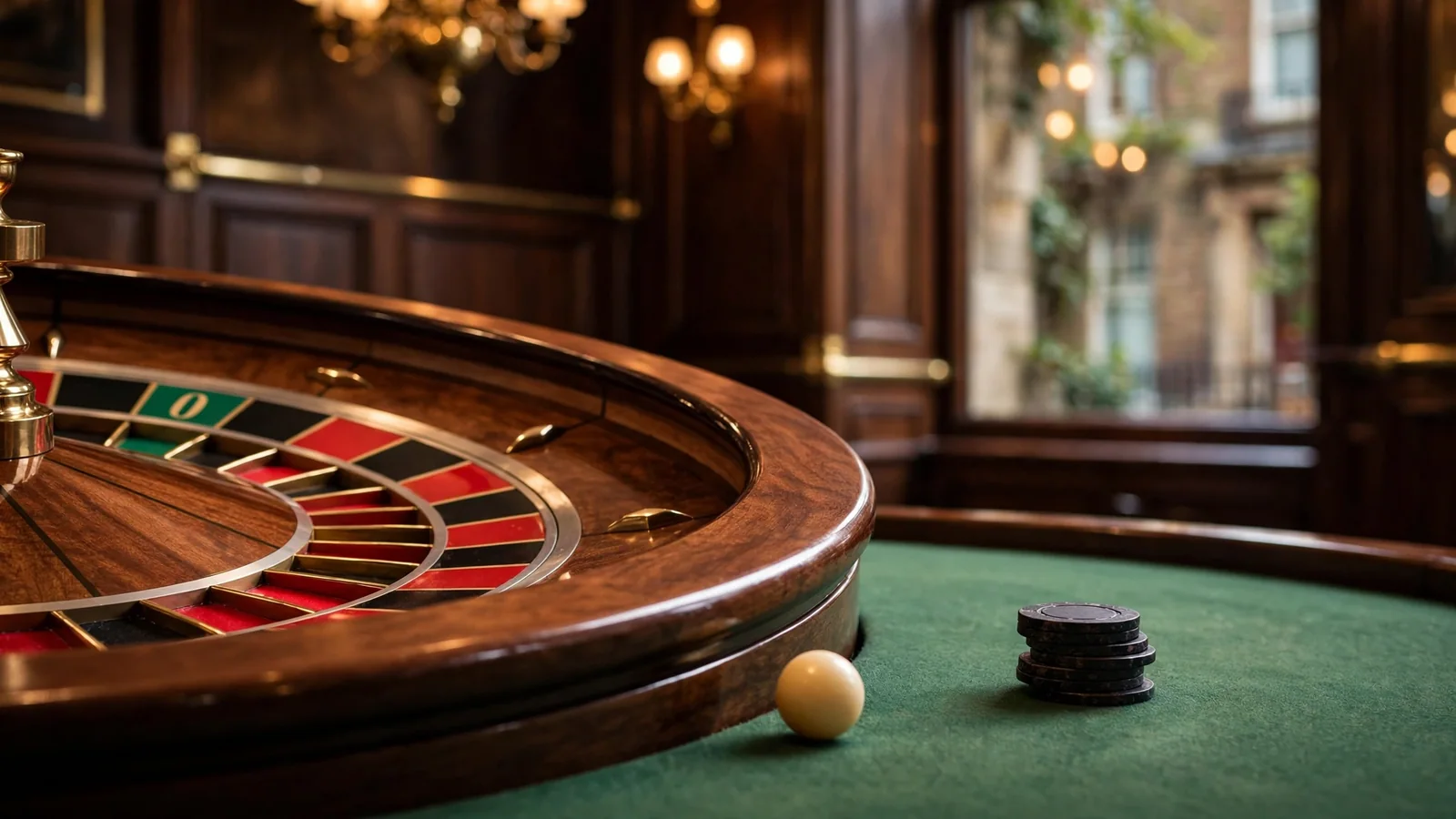
Table of Contents
- French Roulette’s Zero Rule Is the Difference That Matters
- Where French Roulette Appears in UK Casino Lobbies
- A ‘Best’ French Roulette Casino Depends on the Terms
- Low-Stakes Tables and the Meaning of a Minimum
- Live Dealers, Auto Roulette and the Cost of Speed
- Roulette Bets: Payouts Without the Sales Language
- The UK Licence Behind a Real-Money Roulette Table
- What ‘Premium’ Can—and Cannot—Change
- Playing Roulette Without Believing in a System
- French, European and American Roulette Are Not Interchangeable
French Roulette’s Zero Rule Is the Difference That Matters
A French roulette wheel has 37 pockets: the numbers from 1 to 36 and one green zero. That single zero is not a decorative feature. It affects the chance of a bet winning, and the rules applied when it appears can change how much is lost on certain wagers. In French roulette, La Partage and En Prison are the rules that make the difference.
The important distinction is between a number bet and an even-money bet. An even-money bet covers a broad outcome such as red or black, odd or even, or low or high. It wins when the chosen side comes up and loses when the other side does. The zero sits outside those groups, so it is not red or black, odd or even, or low or high. Without a special rule, a zero result costs the player the full stake on an even-money bet.
La Partage changes that settlement. When the ball lands on zero, half of an even-money stake is returned instead of the whole stake being lost. The other half is still lost. The rule does not make zero a winning result, and it does not affect every kind of wager. Its benefit is specific: it reduces the cost of zero on eligible even-money bets.
That distinction matters because the wheel still has the same pockets. La Partage does not remove the zero or make a chosen colour more likely to appear. It changes what happens to a particular bet after the zero has appeared. In practical terms, the odds of the spin remain a matter of chance; the rule softens one losing outcome.
The effect can be expressed in the house edge. On even-money bets, La Partage brings the edge down to 1.35%. That is lower than the standard European roulette edge of 2.70%. The figures describe the mathematical disadvantage built into the rules over time, not a prediction about an individual session. A player can still lose quickly, or win on a short run. The difference is in the long-run structure, not a promise about what happens next.
Hi-Lo Casino UK: What “Live” Actually Means
En Prison is related, but it handles the zero result differently. Rather than returning half the stake immediately, the casino holds the even-money bet for the next spin. The wager is effectively set aside: it is not available for another bet while it is in prison. If the next result wins for the original selection, the stake is returned; if it loses, the stake is lost. The precise table rule should be read as displayed, since the treatment of another zero can depend on the table’s stated terms.
From the player’s side, En Prison can feel less direct than La Partage. With La Partage, part of the stake comes back at once. With En Prison, the player has to wait for another spin to find out whether the held stake returns. The underlying purpose is similar: a zero does not automatically take the full amount of an even-money wager. The experience of the rule is different, though. One settles part of the loss immediately; the other leaves the stake unresolved.
I have found that this is where descriptions of a “low edge” can become misleading. The phrase may sound as if the whole game has been softened equally. It has not. La Partage applies to even-money bets, not to every way of betting on the layout. A player choosing a different kind of wager should not assume that the same zero treatment applies. The bet type and the table’s rules have to be considered together.
French roulette is regarded as having the lowest house edge among standard roulette variants because of La Partage and En Prison. That is a comparison of game rules, not a claim that every French table is identical in presentation or that every wager receives the same protection. The wheel’s 37 pockets establish the basic outcomes; the zero rules determine how certain bets are settled when one of those outcomes appears.
This is why the zero rule deserves attention before the layout, graphics or table name. The colour of the felt may make little difference to the maths. The settlement rule does. On an eligible even-money bet, a zero can mean losing half the stake under La Partage, or having the wager held under En Prison, rather than losing it outright. Small rule on screen. Material difference over time.
House Edge Comparison
On even-money bets, La Partage reduces the house edge to 1.35%, which is lower than the standard European roulette edge of 2.70%.
Where French Roulette Appears in UK Casino Lobbies
French roulette is not always presented as a prominent, separate category. In an online casino, it may sit among roulette games, appear in a live-casino lobby, or be grouped with other table games. The name can be easy to miss when a catalogue is organised around game providers or formats rather than roulette variants. A search within the casino’s own lobby can be more useful than scanning its front page.
I have found that the label itself is only the start of the check. A tile saying “French Roulette” identifies what the operator is presenting, but the game’s information panel or rules screen is where the actual format should be confirmed. Game names can be brief, while the distinctions that matter are in the rules attached to the table. A catalogue label is a signpost, not a full description.
Finding the game in a changing catalogue
Casino lobbies are built to serve several kinds of browsing. Some lead with live tables; others put digital games first and leave table games behind a menu. Roulette may be listed as a category, but French roulette might only become visible after opening that category. On a smaller screen, menus and filters can be condensed, so a game that is available may not appear in the first set of tiles.
Fast Casino Payouts in the UK: What Speed Means
The arrangement is not a promise of availability. Operators can change their catalogues, and the same casino’s desktop and mobile layouts may present the catalogue differently. A lobby search is therefore a practical starting point, followed by a check of the game’s own page. If a title does not appear in a search, browsing the roulette or live-casino categories can help distinguish an absent listing from one that is simply filed elsewhere.
There is also a difference between a game being named in a catalogue and a table being accessible from an account. A listing may lead to a sign-in screen, or the game may be unavailable in a particular version of the lobby. The useful check is whether the game opens through the operator’s own site or app and whether its rules remain available there. A third-party description can help locate a title, but it cannot confirm how the operator currently presents it.
Live tables and digital versions
French roulette can be delivered in different ways. A live table uses a streamed casino setting; a digital version simulates play on screen. Those labels describe how the game is delivered, not whether a specific French rule is in force. The rules shown for the individual table matter more than the visual style or the category heading.
This is particularly relevant when a lobby uses broad labels such as “roulette” or “live roulette”. Those labels may include several games, and a French-style table can be one entry among them rather than a dedicated lobby section. Conversely, a French roulette title may be grouped under a studio or provider name. I would treat the lobby’s categories as navigation aids, then verify the title and its displayed rules at the game level.
Do
- Use the lobby search to find specific titles
- Check the game’s information panel for actual rules
- Verify the operator’s UKGC licence details
Don’t
- Rely solely on a “French Roulette” catalogue label
- Assume a premium label confirms specific rules
- Trust third-party descriptions to confirm current availability
Some catalogues make the game easier to find through filters; others rely on a text search or a long scroll through tiles. Where several similarly named games appear, opening each information panel is the reliable way to identify the intended version. The same caution applies to a table promoted as premium: presentation does not tell the whole story. That label belongs to a different question from whether the game is French roulette.
Check the operator, not just the listing
A search result or review page can point towards a casino, but availability needs to be checked at the operator itself. The live lobby is the evidence of what that account can access at that time. This matters because a catalogue can be revised, and a title may be removed, renamed or placed in a different category after an external page was written.
For real-money play in Great Britain, the operator’s regulatory status is part of the same basic check. The UK Gambling Commission regulates online casino activity in Great Britain. A game listing on a separate website does not establish that the operator serving the player is within that regulatory system; the casino’s own site and its licence details are the relevant places to check.
I have seen catalogue language do a lot of work with very little space. A tile can suggest a familiar game, while the information needed to identify its rules sits one click deeper. That is normal lobby design, but it means the title alone should not be treated as confirmation. Locate the game, open its details, and make sure the table itself is the one being sought.
Fast payout online casinos in the UK: what to know
The practical point is simple: French roulette is a catalogue entry, not a guarantee that every UK casino offers it or that every version carries the same presentation. Availability belongs to the individual operator and can change with its current lobby. A short check inside the casino is more dependable than assuming that a general list of games applies everywhere.
A ‘Best’ French Roulette Casino Depends on the Terms
“Best” is not a useful label on its own. I have seen casino comparisons treat a French roulette logo in the lobby as if it settled the question. It does not. The practical comparison is between the terms attached to the specific table, the information the operator makes available and any bonus conditions that affect how a wager is treated.
I start with the game’s own information panel, not the casino’s promotional description. The rules should identify the roulette version and state which special rules apply. A French label is not enough: the table’s displayed rules need to confirm whether La Partage or En Prison is in effect, and explain how the table handles a zero. If that information is missing or hard to find, there is no sound basis for comparing the offer with another casino’s.
The distinction matters because a French table’s advantage depends on its rules, not its name. European roulette has a house edge of 2.70%, but that figure should not be copied across to a French table without checking its stated conditions. A casino may offer more than one roulette game, and a lobby tile can conceal meaningful differences between them. I treat the rules attached to the actual game as the relevant terms.
Choosing a Casino
- Confirm if La Partage or En Prison is in effect
- Locate the specific RTP information for the table
- Check the game weighting for roulette in bonus terms
- Verify the operator’s current UKGC licence status
Make the RTP information usable
RTP should be accessible before play, ideally from the game information screen or the operator’s help pages. A figure with no clear link to the named game is not much help: the operator should make it possible to establish which table or version the information describes. If a game offers different rule sets, its published information should be read alongside those rules rather than treated as a general promise about every roulette table in the lobby.
RTP and house edge describe related aspects of a game’s long-run mathematics, but neither predicts an individual session. I use published RTP as a comparison point, not as a forecast. Where two casino pages use the same broad label but provide different levels of detail, the clearer disclosure is more useful. Where the RTP cannot be found, that is a limitation of the offer’s transparency—not evidence that the game has better or worse odds.
This is also where the operator’s presentation can do a little too much work. “Fair” or “favourable” is marketing language until it is backed by rules and accessible game information. Clear terms beat confident adjectives.
Read bonus terms as a separate contract
A bonus can make a casino look more attractive while making roulette less relevant to the offer. The key line is game weighting: it states how roulette wagers count towards wagering requirements, if they count at all. The promotion’s headline does not answer that question. The terms may distinguish between live roulette and RNG roulette, or exclude a category entirely, so the exact game type matters.
Keno Online Casinos in the UK: How the Game Works
A specialist comparison review reports that roulette wagering can count at different rates across operators, with live roulette sometimes weighted at 10% or 20% and RNG roulette at 100%. Those figures should be treated as a prompt to inspect the current promotion terms, not as a fixed market rule. The operator’s own terms govern the offer in force. They should also make clear whether particular tables are excluded and whether the bonus funds can be used on them.
I separate the value of the game from the value of the promotion. If roulette contributes little or nothing, a large bonus headline may have little practical relevance to someone choosing a casino for French roulette. A smaller promotion with straightforward conditions may be easier to assess. Neither is automatically better; the comparison depends on whether the terms match the intended play.
Compare evidence, not rankings
For a best French roulette casino UK comparison, I would keep a simple record for each operator: the table’s stated rules, where its RTP information appears, and the game-weighting clause for any bonus under consideration. That makes differences visible without pretending that one casino wins on every measure. If a key detail cannot be confirmed, it should remain unresolved rather than be filled in from an assumption.
The operator itself matters too. Real-money casino play for British customers requires a current UK Gambling Commission licence. The licence number can be checked on the Commission’s public register; a familiar brand or polished table interface is not a substitute. A UKGC-licensed operator must also make the required account controls available, including deposit and loss limits, session reminders, reality checks, cool-off options and GamStop self-exclusion. New customers must be prompted to set a financial limit before their first deposit.
Licensing Risk
Using an operator without a valid UKGC licence for real-money play in Great Britain is unlawful and lacks essential regulatory protections.
I would also look for an accessible route to raise a complaint and information about the approved Alternative Dispute Resolution service. Those details do not change the wheel, but they do show what recourse exists if a dispute arises.
No universal winner. The useful choice is the operator whose table rules, RTP disclosure and bonus conditions can all be checked—and whose regulatory status is clear.
Recommended online casinos
- NightLuckBonus: Welcome Pack + 805% Up To 6400€ + 280 FS · Payout speed: 1-3 business days
- SlotoSportBonus: 500% up to £ 10 200+ 777 FS · Payout speed: 1-3 business days
- SpinFormulaBonus: 550% Up To £15,000 + 550 FS · Payout speed: 1-3 business days
- x3betBonus: Welcome Pack 100% Up to £1.000 + 200 Free Spins · Payout speed: 1-3 business days
- Revery PlayBonus: 100% up to€1,000+ 100 FS · Payout speed: 1-3 business days
- ZombillionBonus: Welcome Pack 250% up to £4000 + 200 FS · Payout speed: 1-3 business days
- ChanzeBonus: Slots Welcome Bonus #1 200% up to €500 · Payout speed: 1-3 business days
Low-Stakes Tables and the Meaning of a Minimum
A low minimum is an entry point, not a promise that every French roulette table will accept the same stake. The amount shown belongs to a particular game and table configuration. It can differ between an RNG game, a live studio table and an automated wheel, even when the lobby gives them similar names. The practical comparison is the minimum displayed after opening the game, not a general label such as “low stakes”.
RNG roulette simulates each spin with a random number generator. It can offer quicker play and lower entry stakes; some games have minimums as low as 10p. That makes RNG a natural place to look for low-limit French roulette, but the format alone does not establish that a particular title uses French rules. The game’s own information needs to confirm the variant and the applicable table minimum.
Live roulette has a different cost of entry. UK live tables can start at 10p, so a streamed dealer game is not automatically beyond a modest stake. The lowest figure is not necessarily available on every table, however, and a French roulette label does not tell the whole story. The posted minimum is the relevant detail. A table described as standard-limit may simply sit between the cheapest and more expensive choices in that operator’s catalogue; the label does not set a market-wide stake.
Live Baccarat Online Casinos in the UK: What to Check
Automated roulette can reach a lower entry point. A specialist review reports that some UK auto-roulette and speed formats start at 5p. That is a description of particular offerings, not a fixed promise across casinos or a guarantee that the format will be French roulette. The distinction matters: the cheapest roulette table in a lobby may use another variant, while the French table may have a higher minimum.
A minimum also needs to be read as a boundary, not as a recommended stake. It says what the table will accept at the bottom end; it does not describe what a typical session costs. A low entry figure can make a game accessible, while faster or longer play can still increase the total amount wagered. I have seen “low limit” used as a reassuring label when the detail that matters is several clicks deeper: the minimum shown on the actual table.
For a useful comparison, separate the format from the limit. First establish whether the game is RNG, live or automated. Then confirm that it is French roulette, and read the minimum shown in the game itself. If the lobby lists several versions, compare the individual entries rather than assuming that the same title carries the same limit everywhere. A displayed minimum is more useful than a broad category such as low, standard or high.
RNG Roulette
Simulated play via random number generators, often offering the lowest entry stakes (some as low as 10p).
Live Roulette
Streamed dealer games with a physical wheel; minimums can start at 10p depending on the table.
Automated Roulette
Physical wheels operated without a live dealer, with some speed formats starting at 5p.
The same caution applies at the other end of the range. A high-limit or VIP table is a different stake environment, not a different meaning of “French roulette”. The label may indicate a table positioned for larger wagers, but it does not by itself tell how the game is configured. Nor does a standard-limit heading establish a universal standard. Operators organise their menus differently.
For someone comparing low-stakes French roulette, the decisive question is therefore not whether a casino advertises a low-limit section. It is whether the specific French game has a minimum that fits the intended stake. RNG games can have very low stated minimums, live tables can also begin at a low level, and selected automated formats may start lower still. Those are format-level clues, not substitutes for checking the table.
Small print, visible stakes.
Live Dealers, Auto Roulette and the Cost of Speed
A live French roulette table and an automated game can look similar on screen, but they deliver the game differently. In a live casino, cameras stream a real wheel from a studio. A human dealer sets the game in motion, and the ball physically travels around the wheel before landing. The pauses are part of the format: bets close, the wheel turns, the result is announced, and the next round begins.
That sequence gives live play a visible rhythm. The camera shows the wheel and dealer rather than presenting a simulated result, and the space between rounds is shaped by the physical process. In my experience, that makes a live table feel less like a series of rapid prompts and more like a continuous studio game. It does not make the outcome easier to read. The presentation changes; chance does not.
Live Blackjack Online Casino UK: What to Check
Automated roulette removes some of that studio pacing. In RNG roulette, software uses a random number generator to simulate each spin. There is no streamed dealer or physical ball drop to follow, so rounds can move on as soon as the game is ready. That makes the format useful for players who prefer a self-contained screen and a brisker sequence, but speed is not a measure of quality.
“Fast” is the word that needs scrutiny. A specialist review gives speed roulette a rate of more than 150 spins an hour, compared with 80–100 at a standard table. Those figures describe a reported format, not a guaranteed pace at every operator. A live stream still involves a dealer and a wheel; a speed-branded table shortens the intervals between rounds. The distinction is practical: less waiting means more decisions in the same period.
RNG American roulette is reported to run at 150 to 200 or more spins an hour, while live dealer play is given at 50 to 60 spins an hour. The comparison is between delivery formats, not a promise that every table will keep that exact tempo. Interface delays, table procedures and the time taken to place bets can all affect the experience. Still, the broad point holds: a simulated game can cycle through rounds faster because it does not need to show a physical wheel being spun.
Spin Speed
Speed roulette can reach over 150 spins per hour, significantly faster than the 80–100 spins typically seen at a standard table.
Automated play can also refer to a physical wheel operated without a live dealer on screen. That is different from RNG play: the result comes from a real wheel, but the presentation does not depend on a streamed human dealer. The label “auto” alone does not settle which setup is in use. The game description and screen make that clearer.
For a live French roulette experience, the key distinction is therefore not simply live versus auto. It is whether the game shows a studio wheel, simulates spins in software, or automates a physical wheel—and how much time each format leaves between decisions. Faster play compresses that time. It can make a session feel more absorbing, but it also means a bankroll can be exposed to more rounds in a shorter stretch.
Speed is a cost, not a feature by itself. The slower pace of a live table may be part of its appeal; the quicker cycle of an automated game may suit a different preference. Neither changes the basic uncertainty of the next result. The interface sets the tempo. Nothing more.
Roulette Bets: Payouts Without the Sales Language
A roulette payout is easiest to read as winnings relative to the stake, not as the total amount placed back in the account. A bet quoted at 35:1 returns winnings at that rate if it wins; the original stake is separate. That distinction matters when comparing a single-number selection with a bet covering more outcomes. Bigger quoted odds do not mean a better chance of winning.
A straight-up bet selects one number. On European and American roulette, it pays 35:1. A split covers two adjacent numbers and pays 17:1. A street covers a horizontal row of three numbers and pays 11:1. The pattern is mechanical: as a bet covers more numbers, its payout per winning stake falls. The table’s paytable is the useful reference; promotional wording cannot alter the arithmetic.
Outside bets cover broader groups. Red or black, odd or even, and high or low each pay 1:1. Their simple presentation can make them seem like a different kind of wager, but the return still follows the posted odds. A win returns an amount equal to the stake as winnings, with the stake itself accounted for separately.
The distinction becomes more visible in Lightning Roulette. A specialist review describes its straight-up bet as paying 29:1 when no lightning multiplier applies, rather than the 35:1 associated with standard roulette. That is a specific reported condition, not a rule to assume for every table or version. The game’s displayed rules should settle which payout applies before a bet is placed. If a multiplier does apply, its effect belongs to the stated feature terms; it should not be silently built into the base payout comparison.
When I check a roulette table, I separate three things: what the bet covers, what the quoted ratio pays, and whether a game feature changes that ratio. Those are easy to blur in a busy interface. A bright feature can draw attention to an occasional enhanced return, while the ordinary payout remains the number that applies when the feature does not. Read the base line first. Then the exception.
This is true whether the table is labelled French roulette or another roulette format: bet names describe coverage, while the payout line describes the return. The two should not be treated as interchangeable. A street is not a split, and a single number is not an outside bet, even when the layout makes selections look equally simple. No sales language required.
Roulette Payouts
Example: 35:1 × £1 stake = £35 winnings (plus the original £1 stake returned).
The UK Licence Behind a Real-Money Roulette Table
A real-money French roulette table is not lawful for British customers merely because it loads in a browser. The operator must hold the relevant UK Gambling Commission (UKGC) licence to offer remote gambling to customers in Great Britain. The Commission regulates online casino activity there; a platform without a valid UKGC licence cannot legally offer real-money live roulette to British residents. Offshore location does not remove that requirement.
I treat the licence as the starting check, not a quality mark for every part of the service. The operator must verify a customer’s age before allowing a deposit; online gambling is for adults aged 18 and over. The licence number can be checked against the UKGC public register before funds are deposited. Credit cards cannot be used for gambling, including through a wallet that lets credit-card funds reach the account.
The account controls matter just as much as the table. New customers must be prompted to set a financial limit before their first deposit, and account-level limit controls must remain accessible. UKGC-licensed live casino operators must also offer deposit and loss limits, session time reminders, reality checks, cool-off periods and GamStop self-exclusion. These are working controls, not decorative account settings.
There is a route when a dispute remains unresolved: the casino must provide an internal complaints process and access to an approved Alternative Dispute Resolution service. Operators also contribute to the Research, Education and Treatment levy.
That is the practical boundary around an online casino with French roulette: the game itself may be familiar, but the operator’s legal status determines whether it can serve British customers for real money. I would separate that check from the game’s presentation. A polished live table does not substitute for a current licence or accessible account protections. Plain distinction.
What ‘Premium’ Can—and Cannot—Change
“Premium” is a label for how a roulette table is presented, not a mathematical property of the wheel. I have seen the word used to signal a more polished studio, a prominent place in the lobby or a table positioned for higher stakes. None of those descriptions, on its own, establishes that a spin is more favourable.
The useful distinction is between presentation and rules. A premium French roulette casino table should still show the game’s rules and its return-to-player information. Those details describe the version actually offered; the label does not. If the rules are hard to find, the name of the table is not a substitute for them.
For context, European roulette has a house edge of 2.70%. French rules can reduce the edge on qualifying bets, but a premium presentation does not itself add a rule or improve the figures. The mathematics follows the wheel and the rules in force, not the table’s branding. A velvet backdrop, a formal dealer or a higher-stakes setting may change the atmosphere. They do not prove a better return.
Attention: A "premium" or "exclusive" label refers to presentation and atmosphere, not to improved mathematical odds or better returns.
I treat “exclusive” in the same way: as positioning until the published game information supports something more specific. A higher minimum can affect how much money is exposed per decision, but it is not evidence of improved odds. Nor does a premium badge establish that the table uses a particular ruleset. Check the displayed rules and RTP for that exact game, rather than relying on a category name or promotional description.
That is the practical test. Premium may describe the experience around the wheel. It cannot, by itself, change what the wheel can pay or the chances attached to its outcomes. Branding is not a rule.
Playing Roulette Without Believing in a System
The Martingale is easy to describe: after each loss, the player doubles the next stake, intending to recover earlier losses when a win arrives. I have seen its appeal in the neatness of the sequence. It turns an uncertain game into something that looks like a procedure, and that can feel reassuring while the bets are still manageable.
The weakness is that a losing run makes the required stake grow quickly. Each step depends on having enough bankroll to continue, and a player can reach a point where the next bet is unaffordable or exceeds the table’s permitted stake. The losses already made do not become safer because a larger wager is planned. A streak can put serious pressure on a bankroll before the hoped-for recovery arrives.
That matters when people play French roulette online as well as at any other roulette table. The French label does not make a sequence of spins predictable. A staking method changes how money is committed; it does not change the chance outcome of the next spin. Previous losses are not a signal that a win is due.
I would treat any system that promises control as a way of organising stakes, not as an advantage over the wheel. That distinction is often lost in promotional language: “strategy” sounds like a route to better results, while the practical effect may simply be larger bets after setbacks. The method can also encourage a player to keep going because stopping feels like abandoning the recovery plan.
No system can forecast the final outcome. Roulette is determined by chance, spin by spin. The sensible test is not whether a sequence looks orderly, but whether the planned stakes remain affordable if it fails. The wheel owes nothing.
French, European and American Roulette Are Not Interchangeable
The useful comparison starts with the wheel, not the table’s name. European roulette has numbers 1 to 36 and one green zero: 37 pockets in total. French roulette uses that same single-zero layout, but its rules can alter the house edge on eligible bets. A French roulette label therefore means more than a colour scheme; the rules displayed for that specific game still matter.
American roulette adds a double zero. Its 38 pockets are numbered 1 to 36, with both zero and double zero in green. That extra pocket shifts the mathematics: the house edge is 5.26%, compared with 2.70% for European roulette. The difference is built into every spin, not something a different betting pattern can cancel.
There is another American variant to notice. A specialist review reports a table with a third green pocket marked 000; it gives that version a house edge of 7.69%. This is a reported table format, not a reason to assume every American wheel has three green pockets. The standard American layout has two.
The American basket bet adds a separate complication. It covers the zero, double zero, 1 and 2, and carries a 7.89% house edge. That figure is higher than the general American roulette edge, so the bet’s placement matters as well as the wheel.
I have seen game names treated as if they were interchangeable catalogue labels. They are not. For casino French roulette, the practical distinction is the single-zero wheel plus the French rules; European roulette shares the wheel layout, while American roulette introduces an additional zero and a steeper house edge. Read the displayed variant and rules together. Names alone are not enough.
What are inside and outside roulette wagers?
Inside bets cover specific numbers or small groups, such as a straight-up bet on one number or a split bet on two adjacent numbers. Outside bets cover broader outcomes such as red or black, even or odd, and high or low.
How does the 10x wagering cap affect roulette bonuses?
Since January 2026, UK-licensed operators cannot set bonus wagering requirements above 10x. Roulette wagers may contribute only 10% to 20% at many operators, while RNG roulette can count at 100%, so check the bonus terms for the game’s contribution rate.
Should I play American or European roulette if I’m in the UK?
European roulette has the lower house edge: 2.70%, compared with 5.26% for American roulette. Its wheel has one zero rather than the American wheel’s zero and double zero.
What is the difference between European and American roulette wheels?
European roulette has 37 pockets: numbers 1 to 36 and one zero. American roulette has 38 pockets, adding a double zero; some tables also have a 000 pocket.
Are real-money roulette sites in the UK safe?
The UK Gambling Commission regulates online casino activity in Great Britain. That oversight does not remove the risks of gambling or guarantee a particular outcome.
Written by the editors at Xtraspin Casino.