Live Roulette in the UK with English-Speaking Dealers
 Available in GB
Licensing, live-table setup, playing costs and bonus terms all help clarify what to check when comparing roulette casinos.
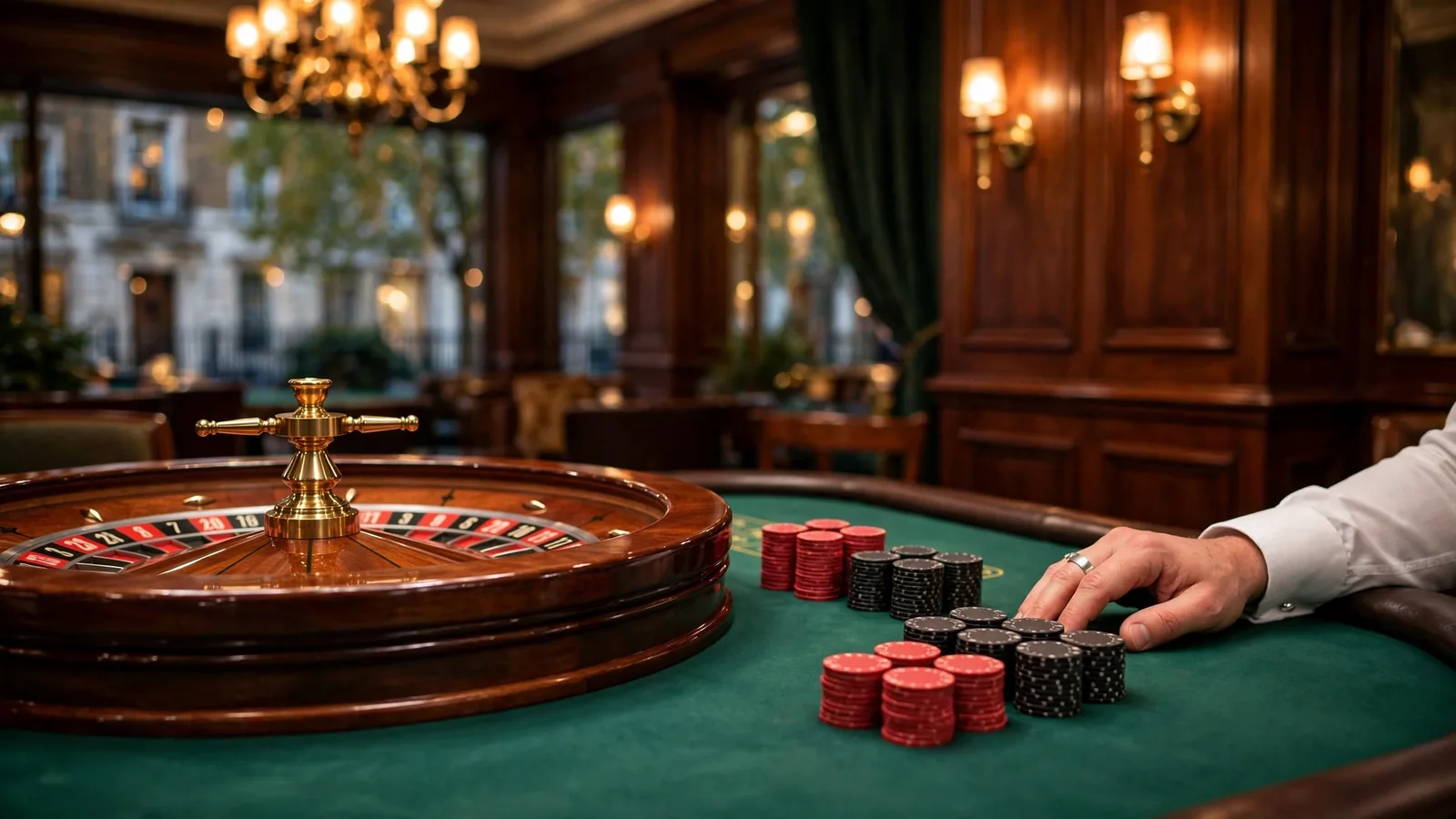
Table of Contents
- What a UK Roulette Casino Has to Get Right
- Playing Roulette Online: The Live-Casino Setup
- Roulette Sites and the Slot-Stake Rules That Do Not Apply
- Roulette Tables, English-Speaking Dealers and Other Live Games
- Choosing a Roulette Casino Without a “Best” List
- Deposits, Limits and the Cost of Playing
- Roulette Bonuses: Read the Conditions Before the Headline
- Free Roulette Play and What It Can—and Cannot—Show
- Roulette Odds, Winning Claims and Responsible Play
- Lightning Roulette and the Appeal of Live Variants
What a UK Roulette Casino Has to Get Right
A roulette site can look like a casino before its legal position is clear. The table, branding and account pages are the visible layer; the licence is the part that establishes whether the operator is authorised to offer remote gambling to customers in Great Britain. I treat that as a threshold question, not a mark of quality. A licensed operator can still have terms or service that do not suit a player, but without the relevant authorisation, the basic regulatory safeguards for the British market are not in place.
The UK Gambling Commission is the regulator for commercial gambling in Great Britain and oversees online casino activity within its remit. Its role is not limited to operators headquartered in the country. A business offering remote gambling to consumers in Great Britain must hold the appropriate Commission licence even if the equipment supporting the service is located elsewhere. That detail matters because a website’s physical infrastructure and its regulatory obligations are separate things.
In practice, a foreign address or overseas technology does not, by itself, remove the requirement. The question is whether the operator is serving customers in Great Britain. If it is, the relevant British licensing framework applies. This is one of the points that can be blurred by casino marketing: a site may emphasise where its company is registered, where its servers sit, or which games it carries. None of those details substitutes for the required licence.
The Gambling Act 2005 provides the legal framework for gambling in England, Wales and Scotland. Northern Ireland is outside that Act’s territorial scope, so it is worth keeping the geography precise rather than treating every part of the UK as if the same legislation applies in the same way. For roulette players assessing online access in Great Britain, the central practical issue is whether the remote operator is licensed by the Gambling Commission for the activity it offers.
Games: Online Casino Games in the UK
There are two kinds of licence in the Commission’s system that help explain who is accountable. The Commission grants operating licences to businesses and personal licences to individuals working in relevant roles. They are not interchangeable. The operating licence concerns the company’s authority to provide gambling; personal licensing concerns individuals who perform regulated functions. When a casino presents a licence claim, the important point for the customer is that the business offering the service has the appropriate operating authorisation.
I have seen how easily the word “licensed” becomes a decorative reassurance in promotional copy. On its own, the word does not establish who issued the licence, what business holds it, or whether it relates to the site in question. The useful distinction is between a general statement and a claim that can be checked against the regulator’s public information. Brand names can differ from corporate names, and a website domain may not resemble either. Those are reasons to check the details carefully, not reasons to accept a badge at face value.
Before depositing, verify the operator’s licence number on the UK Gambling Commission’s public register and confirm that the entry corresponds to the business and service being assessed. This is a basic identity check, not a full review of every term or feature on the site. If the details do not line up, a polished roulette lobby does not resolve the discrepancy. Pause there.
The Commission’s authority over remote gambling offered to Great Britain consumers does not depend on where the key equipment is based. That makes the licence relevant to the relationship between the operator and the market, rather than simply to the operator’s premises. A roulette casino may describe itself as international, but a label like that does not answer whether it is authorised to serve British customers.
A licence is also not a promise that every session will go smoothly or that every commercial decision will favour the customer. It means the operator is within the local regulatory system for the gambling it is licensed to provide. That distinction is easy to miss when a site uses terms such as “trusted” or “secure”. Those are promotional descriptions; authorisation is a regulatory status. They do different jobs.
Attention: A licence is not a promise that every session will go smoothly or that every commercial decision will favour the customer.
For online roulette, then, licensing is the starting point for assessing whether a casino belongs in the regulated British market. It does not replace judgement about the rest of the service, but it determines whether the operator has the required standing to offer remote gambling here. I would not treat the licence as a badge of excellence. I would treat its absence, or an unexplained mismatch in the record, as a reason not to proceed.
Regulation cannot remove the financial risk of gambling. Roulette remains gambling, and only money that can be afforded to lose should be put at risk.
Playing Roulette Online: The Live-Casino Setup
Live roulette online combines a physical table with a digital interface. The dealer and wheel are shown through a video stream, while wagers are placed on screen. The result is a game that retains a visible, human-run table but does not require players to be in the room. The screen is the point of contact: it carries the live picture and provides the controls for joining a round.
That distinction matters. A roulette game generated entirely by software presents an animation and a result; a live game shows a real table in operation. In the live format, the stream lets players follow the action as it unfolds, while the interface translates a familiar table layout into buttons and touch controls. The presentation can feel closer to a casino floor, but the game is still being accessed through an online account and a screen.
Mines Casino Game in the UK: How It Works
I find it useful to think of the setup as two systems working together. The studio produces the live table feed; the online platform provides the game lobby, the interface and the connection between a player’s selection and the table. When the two are well integrated, the software stays out of the way. When they are not, loading delays, unclear controls or a crowded display can make the experience feel less direct, even if the video itself is clear.
A live-casino lobby is therefore more than a list of games. It is the entry point to tables, and it helps separate live games from automated versions. A roulette tile may lead to a live table, while another version of roulette elsewhere in the lobby may use a digital presentation. The label and the game screen indicate which format is being offered. The distinction is about how the game is presented and operated, not about the word “roulette” appearing in the title.
On a computer, the table view and the wagering controls can share the screen. On a phone, the same components have to fit a smaller display, so the interface may shift between the live picture and the betting area. That is a practical part of online casino roulette: the stream can be visible, but the controls must remain legible enough to use without guesswork. A player who cannot easily see the table layout or confirm a selection is not being helped by a polished studio set.
Live roulette combines a physical table and dealer shown via video stream with a digital interface for placing wagers.
The online format also changes the pace of participation. A player can enter through a lobby rather than approach a table in person, and the game interface makes the available actions visible on screen. The live feed provides context, while the controls handle the interaction. This can make the experience feel straightforward once the layout is understood; it can also make small interface choices important. A misplaced tap or a button whose purpose is unclear is still part of the experience, even though the dealer and wheel are real.
Live casino has been part of the British online casino landscape for years. Grosvenor first introduced its live casino games in 2013, with a selection that included Blackjack, Texas Hold’em and Roulette. That launch is a useful marker of how established operators brought table games into an online setting: not as isolated roulette software, but as part of a broader live-casino offer. It also shows why the term “live casino” covers more than one game. The format is the shared setting; the individual tables differ.
For a player, the practical question is whether the online presentation makes the table easy to follow. A stable view, readable controls and a clear route from lobby to game all matter more than decorative animation. The dealer’s presence gives the stream its human element, but the interface still shapes what can be seen and how selections are made. This is the central trade-off of playing roulette online: a physical table is brought to the screen, while access and interaction are mediated by software.
Online American Roulette Casinos in the UK
The familiar look of a live table should not be mistaken for a change in the nature of gambling. The setting may resemble a casino, but the activity remains remote play with financial risk. I keep that distinction in view because an immersive stream can make the interface feel like a room rather than a service. The screen does not remove the possibility of loss. Only wager what can be afforded to lose.
Roulette Sites and the Slot-Stake Rules That Do Not Apply
Slot stake limits are sometimes mistaken for a general cap on online casino wagering. They are not a rule that can simply be carried across every game in a casino lobby. A specialist review reports that the Great Britain limits for online slots are £5 per game cycle for adults aged 25 or over and £2 for those aged 18 to 24. The same review distinguishes roulette and blackjack from slots, saying those limits do not apply to either table game.
That distinction matters when comparing roulette casino sites. A roulette wager is not a slot spin, and the slot-specific cap should not be used to infer what a roulette table permits. Equally, the absence of that particular cap does not mean a roulette game has no table limits or that every site sets them in the same way. Those are separate conditions, shown in the game or operator’s terms.
Slot Stake Limits
Slot-specific wagering caps do not apply to roulette; these are separate conditions shown in the game or operator’s terms.
The underlying difference is the kind of game being played. An online slot runs through game cycles; roulette is a table game in which a wager is placed against the outcome of a spin. Similarities in the casino menu do not make the regulatory treatment identical. The interface may place both games side by side, but the relevant rules attach to the game category, not to the fact that both are offered by the same casino.
This is where promotional language can blur the detail. “Casino-wide” may sound as if one rule governs every title, when the actual condition may be specific to slots. I have found it more useful to read a limit in context: which game it covers, how the operator defines the relevant play cycle, and whether the wording is about a statutory cap or a table’s own minimum and maximum wagers. Different questions. Different answers.
For someone aged 18 to 24, the reported slot limit is lower than the figure stated for older adults. That age distinction belongs to online slots; it should not be presented as a roulette restriction. A player comparing live roulette casino sites should therefore avoid treating a slot-limit summary as a description of roulette table stakes. It says nothing by itself about the wager range at a particular table.
Nor does this distinction amount to a recommendation to seek out higher roulette limits. The practical point is narrower: slot rules and roulette conditions should not be conflated. A site’s game information and terms need to be read for the specific title, rather than inferred from another category in the same lobby. In an industry where menus group unlike products together, category labels matter.
European Roulette Online Casinos in the UK: Odds
When a casino describes its limits, the wording should make clear which games are covered. If the description only refers to online slots, it is not evidence of a roulette cap. If it refers to a roulette table, it should be treated as a table condition rather than as a slot rule. That careful separation is more useful than calling a site “best” on the basis of one number detached from its context.
The distinction does not remove the financial risk of roulette. The fact that a slot stake limit is not the applicable rule for roulette is not a signal to increase a wager or chase losses. Only gamble what can be afforded to lose.
Roulette Tables, English-Speaking Dealers and Other Live Games
A live roulette table is more than a wheel on screen. The dealer’s commentary, the camera view and the way the interface presents each stage of play all affect how easy it is to follow. For an English-speaking audience, dealer speech matters most when it helps make the action clear: announcements should be audible, understandable and consistent with what is happening on the table.
I pay attention to the whole presentation, not just a language label. A table described as English-speaking should make that clear before play begins, rather than leaving the player to discover it after joining. Sound controls are useful too: dealer audio may need to be adjusted independently of other game sounds, and captions or on-screen prompts can help when speech is difficult to hear. If the interface displays the betting layout and table activity clearly, it is easier to keep track of what is happening without relying on commentary alone.
Do
- Ensure dealer announcements are audible
- Use independent sound controls
- Verify the layout is clearly visible
Don’t
- Rely on language labels alone
- Accept obscured table action
- Trust polished intros over clear speech
There is a practical difference between a dealer who speaks throughout and a stream that offers only occasional announcements. Neither style is automatically better; the point is whether the presentation suits the way the game is being followed. I have found that small details carry more weight than polished introductions: clear speech, a stable view of the wheel and table, and controls that do not obscure the action. Presentation first.
What the table experience can show
A live stream can make the table feel more immediate, but it does not remove the need to understand the game interface. The roulette layout should remain visible, with selections and table information easy to distinguish. Any displayed instructions should be readable before committing to a wager. When the dealer’s words and the on-screen information are hard to reconcile, the experience becomes less accessible, even if the broadcast looks impressive.
It is also worth separating a dealer’s language from the casino’s wider interface language. Menus, help text and table labels may be presented separately from the live commentary. Checking both gives a better sense of whether the full experience is comfortable to follow. A spoken introduction in English alone says little about the clarity of the rest of the table.
Live casinos also place roulette alongside other table and studio-style games. Blackjack and Texas Hold’em are familiar examples of card games, while the wider catalogue may include titles such as Common Draw, Crazy Time, Dream Catcher and Infinite Blackjack. These are different formats, not alternate roulette tables. Their presence can make a live lobby feel varied, but it does not tell much about the quality or accessibility of a particular roulette stream.
Live Baccarat Online Casinos in the UK: What to Check
The useful comparison is therefore between the table presentations themselves: whether the dealer is understandable, whether the view supports the game, and whether the interface keeps important information in sight. A busy lobby is not a substitute for those basics. Nor does an English-language label guarantee that every element will be equally clear.
I treat live roulette as a visual and spoken experience, but not as a reason to wager more or stay longer. The stream can make a table easier to follow; it cannot change the underlying uncertainty of gambling. Only gamble what can be afforded to lose.
Recommended online casinos
- NightLuckBonus: Welcome Pack + 805% Up To 6400€ + 280 FS · Payout speed: 1-3 business days
- SlotoSportBonus: 500% up to £ 10 200+ 777 FS · Payout speed: 1-3 business days
- SpinFormulaBonus: 550% Up To £15,000 + 550 FS · Payout speed: 1-3 business days
- x3betBonus: Welcome Pack 100% Up to £1.000 + 200 Free Spins · Payout speed: 1-3 business days
- Revery PlayBonus: 100% up to€1,000+ 100 FS · Payout speed: 1-3 business days
- ZombillionBonus: Welcome Pack 250% up to £4000 + 200 FS · Payout speed: 1-3 business days
- ChanzeBonus: Slots Welcome Bonus #1 200% up to €500 · Payout speed: 1-3 business days
Choosing a Roulette Casino Without a “Best” List
A “best” label can hide the decisions that matter. I would start with the operator’s identity, not its table graphics or promotional copy. A casino serving customers in Great Britain must hold the relevant UK Gambling Commission licence. The practical check is to find the operator’s licence number and confirm it on the Commission’s public register before depositing. The register entry should make sense alongside the brand and the site being used; a familiar name on its own is not proof.
That check is a threshold, not a recommendation. It establishes whether the operator sits within the British regulatory system, but it does not establish that its roulette tables suit a particular player. I would treat a licence as the beginning of the assessment. Nothing more.
Licence and Safety Check
- Find the operator’s licence number
- Confirm the entry on the UKGC public register
- Locate financial limit controls in the account area
- Identify the internal complaints process
- Check the ADR service provider
Next comes account control. A casino’s limits are useful only if they are visible and can be changed without a search through several layers of menus. Remote operators must prompt new customers to set a financial limit before the first deposit and provide accessible account-level controls. Responsible-gambling tools, including self-exclusion, should also be available. I look for these in the account area and read the explanations around them: a control that is hard to locate is less useful in practice.
The maximum wager shown at a roulette table is a separate matter from an account’s financial limits. Table limits can affect whether a game fits a player’s intended stakes, while account controls help manage overall spending. I would check the displayed table conditions before joining rather than assume that every roulette table on the same site works on identical terms. No table label turns roulette into a reliable way to make money.
Complaints procedures tell another part of the story. A UKGC licensee must provide an internal process for complaints and access to an approved Alternative Dispute Resolution service. The operator should explain how to raise an issue and how its dispute route works. If that information is buried, unclear or absent, it is a reason to pause and investigate rather than rely on reassuring wording elsewhere.
Online Casino Tournaments UK: Rules and Prize Checks
I have seen how “trusted” can function as a marketing adjective: it sounds like evidence, but the useful evidence is the licence entry, the account controls and the stated route for resolving disputes. The same caution applies to claims about a casino having the best roulette odds. A ranking or slogan does not, by itself, show that one site offers better odds than another.
A sensible comparison is therefore a short set of checks, not a league table: confirm the licence, inspect the controls, understand the complaints route and read the table conditions. These checks cannot predict a result or remove the risk of gambling. Roulette remains a game of chance. Only gamble what can be afforded to lose.
Deposits, Limits and the Cost of Playing
Starting a real-money roulette session begins with the account, not the table. A UK-licensed operator must verify a customer’s age before allowing a deposit. That check is a gate, not a formality to be left until a withdrawal: the account needs to be cleared before funds can be added for gambling.
There is another step before the first deposit. Remote operators must prompt new customers to set a financial limit, then make account-level limit controls accessible. I see this as part of the payment flow, not an optional extra hidden among general account settings. The limit gives the account a boundary for spending; the controls matter because circumstances can change and a setting that cannot readily be found is of little practical use.
Attention: UK-licensed casinos cannot accept credit cards for gambling, including funding routed through money service businesses or qualifying wallets.
The deposit methods available on a site do not all mean the same thing. UK-licensed casinos cannot accept credit cards for gambling. The restriction also covers credit-card funding routed through a money service business. A digital wallet is not automatically a workaround: an operator cannot accept wallet payments if that wallet allows credit-card funds to be used for gambling. The funding route matters, not just the label shown at checkout.
That distinction can be easy to miss when a cashier presents several payment logos side by side. A method appearing in the menu does not establish that every way of loading it is permitted for gambling. The operator has to prevent prohibited credit-card funding, including through a qualifying wallet or intermediary.
Before choosing to play roulette online, it is worth understanding how the site handles deposits, account limits and payment restrictions together. They shape the cost of playing by defining how funds enter the account and how spending can be bounded. They do not make gambling risk-free, and a limit should not be treated as a target to reach.
I also separate money set aside for gambling from money needed for ordinary expenses. A deposit is not a forecast of what will come back, and the convenience of an online cashier does not change that. Only gamble what can be afforded to lose. That is the real ceiling.
Roulette Bonuses: Read the Conditions Before the Headline
A roulette casino bonus is not extra cash in the simple sense suggested by a headline. It is an offer governed by terms: those terms determine who qualifies, which games count, what restrictions apply and when any resulting balance can be withdrawn. I have seen the headline do the selling while the conditions do the actual work.
That applies to a welcome bonus, a deposit promotion or a no-deposit offer. The label alone does not establish what a player receives or what is required in return. A “no deposit” description, for instance, should not be read as “no conditions”. The offer rules still need to explain eligibility and any limits on using or withdrawing a bonus balance.
For roulette, the key detail is whether the promotion expressly includes the relevant table games. Casino terms can distinguish between game categories, so a bonus that appears on a casino page is not automatically available for roulette wagering. A live-casino promotion may also have its own eligibility rules. If the wording does not make clear whether live roulette counts, the headline has not answered the important question.
I look for the mechanics in the terms, not the promotional label: any wagering requirement, the games that contribute towards it, any maximum permitted stake while the bonus is active, and whether winnings or bonus funds are subject to a withdrawal cap. These are examples of conditions to check, not claims that every offer contains them. The precise wording matters. “Eligible games” is only useful if the terms say which games are eligible.
A Lightning Roulette promotion should be treated the same way. The game’s name in an advertisement does not prove that it qualifies for a particular offer; the bonus rules need to say so. Nor does an offer’s presence on a casino site establish that it suits every player. The value depends on the conditions and on whether the player would have chosen to play those games without the promotion.
Bonus terms to check
Verify if the promotion expressly includes roulette, the wagering requirements, the maximum permitted stake while the bonus is active, and any withdrawal caps on winnings or bonus funds.
I treat a bonus as a contract attached to play, not as a discount. If a condition is unclear, its practical effect is unclear too. Better to leave the offer alone than to guess what the wording means.
A bonus does not reduce the risk of gambling or make a session profitable. Only wager what can be afforded to lose.
Free Roulette Play and What It Can—and Cannot—Show
A free roulette game can be useful for learning the layout of an online table before money is involved. I treat it as an interface preview: it shows where the controls are, how a wager is placed or removed, and where the game displays its rules. That can make an unfamiliar screen less distracting.
It is not a promise that a particular casino offers free play. Availability and presentation vary, so the game page needs to make clear whether a session is in demo mode or uses real funds. The distinction matters: a practice balance is not withdrawable money, and using it does not test the experience of staking funds.
What practice can reveal
A free session can help establish whether the table is legible and whether its controls make sense. It can also give time to read the information panel rather than trying to work it out while making decisions. For a French roulette table, for instance, the displayed rules are the place to check the version and its conditions; the label alone should not be treated as a full explanation.
I also look for whether the game makes the current stake and selected choices easy to review before a round begins. Those are practical interface details, not evidence that the game is favourable. A polished screen can still leave important terms in a help panel, and a practice session cannot tell how a player will feel when real money is at risk.
What it cannot prove
Free roulette cannot demonstrate that a player will win with real funds, nor can a short run of results establish a casino’s roulette edge. The table’s rules determine the underlying terms; a few practice rounds do not change them or provide a reliable basis for judging future outcomes. The same caution applies when comparing a standard table with a French roulette version: read the rules shown for that specific game rather than assuming the names mean identical conditions.
I have seen “free” used as if it were a measure of value. It is only a mode of play. It may help with familiarity, but it does not reproduce the financial consequences, decisions or pressure of real-money play. It is not a forecast.
Before moving from practice to a real-money table, the account and game conditions still matter. The practice balance should not be confused with a deposit, and the demo should not be treated as evidence of likely returns. Only gamble what can be afforded to lose.
Summary of Play
- Use free play only as an interface preview
- Read specific game rules for French roulette versions
- Recognise that practice results do not forecast real-money outcomes
- Only gamble what can be afforded to lose
Roulette Odds, Winning Claims and Responsible Play
The phrase “best way to win” suggests that roulette has a dependable method waiting to be found. It does not. A staking pattern can change how much is wagered and how quickly a balance rises or falls; it cannot make a chosen result more likely. Increasing a wager after a loss does not recover that loss by design. It increases exposure to the next outcome.
I have seen winning sessions presented as proof that a system works. They show that someone won during a particular stretch, not that the method can reproduce the result. A run of favourable outcomes can happen, as can a run that moves the balance the other way. A short record leaves out the sessions that ended differently. That is the part advertising tends to omit.
Roulette is not a contest in which persistence eventually earns a win. No approach can ensure a winning result every time, whether the table is in a casino or delivered online. Nor does a method for choosing wagers remove the uncertainty in the game. The sensible distinction is between a plan for controlling expenditure and a claim that a plan controls outcomes. Only the first is within a player’s control.
Claims about “sure wins” deserve particular care. A testimonial, a dramatic run or a confident explanation is not evidence of a guaranteed result. Even a method that appears to work in one session may fail in another, and staking more to chase a target can turn a limited loss into a larger one. The wording matters. “Can win” is not “will win”.
My own rule is to treat roulette as paid entertainment, not a way to make income or repair a shortfall. Decide in advance what can be spent without affecting essential costs, and stop when that amount is gone. Do not borrow, chase losses or let a winning session create a reason to raise the next wager. If play begins to feel difficult to control, taking a break and seeking support is more useful than looking for another system.
Online Casinos Without ID in the UK: What It Means
There is no guaranteed route to a win. Gamble only what can be afforded to lose.
Lightning Roulette and the Appeal of Live Variants
Lightning Roulette gives a familiar roulette table a more distinctive presentation. The appeal is the variant itself: it adds a layer of spectacle to the live format, rather than simply presenting a standard table with a different name. That can make it stand out in a casino lobby, but it does not make it a slot. It remains roulette, and the experience is built around a live table.
When I assess a variant, I separate the visual pitch from the practical difference. The name and presentation tell only part of the story; the game information shown before joining is where the rules and any variant-specific conditions belong. Those details should be read there rather than inferred from a promotional description. No assumed payout or feature is a safe substitute for the rules on the table.
A casino listing for Lightning Roulette is therefore useful as a sign that the game is offered, not as a measure of quality. Nor do casino scores tell the whole story: a rating cannot show whether the table’s pace and presentation suit a particular player. I would treat rankings as a starting point, then check the game screen and the operator’s terms.
There is also a difference between live roulette and a game labelled “Lightning Roulette slots”. The latter wording can blur categories; Lightning Roulette is a live roulette variant, not a slot title. The distinction matters when comparing games or reading a casino’s lobby.
The extra show is not an edge. Roulette remains gambling, and a more dramatic presentation does not make outcomes predictable. Only gamble what can be afforded to lose. Keep that boundary clear.
What are the online slot stake limits in Great Britain?
The limit is £5 per game cycle for adults aged 25 and over, and £2 for adults aged 18 to 24. These limits do not apply to roulette or blackjack.
Are online casino games licensed and regulated?
Yes. Remote operators offering gambling to consumers in Great Britain must hold the relevant UK Gambling Commission licence.
Is LuckyPays licensed by the UK Gambling Commission?
The Commission’s public register dated 26 September 2026 does not list LuckyPays under its brand or stated domain, including luckypays.io, so its UKGC licence cannot be verified there.
Created by the ”Xtraspin Casino” editorial team.