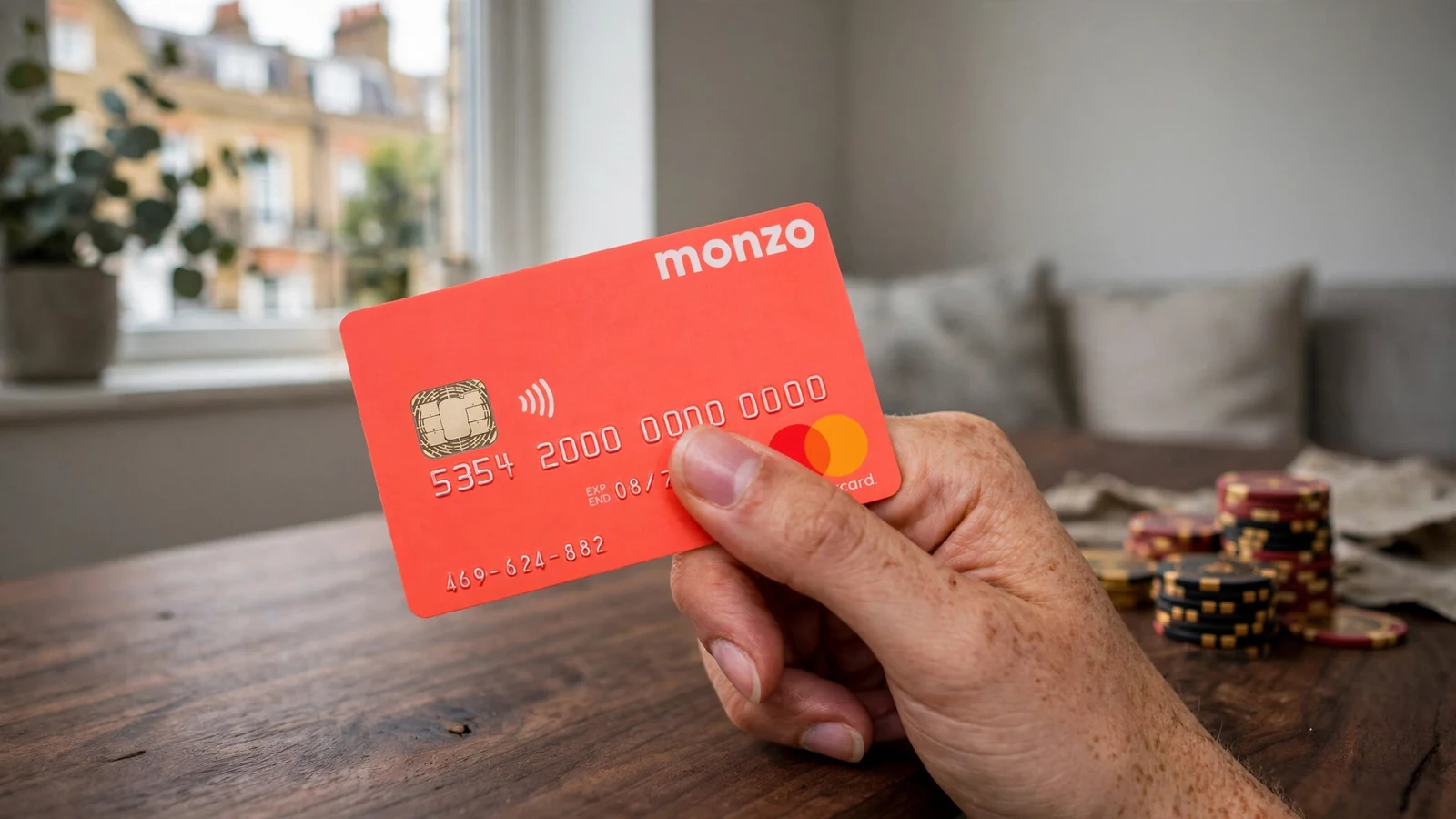
Casinos That Accept Click2Pay in the UK: Cashier Checks
 Available in GB
Availability can depend on the account and transaction, while card rules, withdrawals, bonuses and mobile play require separate checks.

Table of Contents
- Click2Pay Availability: What the Cashier Needs to Confirm
- If Click2Pay Is Missing, Which Payment Routes Remain?
- Debit-Card Deposits and the Credit-Card Boundary
- Mobile Slots: Payment Availability Is a Separate Check
- Real-Money Slots and the Limits of Payment Claims
- Deposits, Withdrawals and the Original-Payment-Source Rule
- Bonus Terms Can Exclude Otherwise Usable Payment Methods
- Minimum Deposits, Limits and the First-Deposit Prompt
- Alternative Payment Names and What They Actually Tell You
- Non-GamStop Searches Do Not Confirm Click2Pay Acceptance
Click2Pay Availability: What the Cashier Needs to Confirm
A search for casinos that accept Click2Pay in the UK can produce a confident-looking list without answering the practical question: does the cashier offer Click2Pay for this account now? I treat those as different claims. A page may describe a payment method, but the cashier is where the operator presents the options available for the transaction being made.
That distinction matters because payment information can date quickly or apply only in a particular context. A method may be mentioned on an old promotional page, in a general payment guide, or in a third-party casino review. None of those establishes that Click2Pay is currently available to a UK customer at a specific operator. Nor does a logo or a broad statement about “easy payments” tell us whether the method can be selected at the point of deposit.
The check is straightforward, but it needs to be done in the right place. After signing in, the cashier should be opened and the deposit methods shown there inspected. Click2Pay needs to appear as a selectable option, not merely as a name elsewhere on the site. If the cashier asks for further details before displaying the final payment choices, those details form part of the check: the relevant question is what the account is actually allowed to use, not what a generic page says might be available.
A payment-method list should also be read precisely. A specialist review may list Visa and Mastercard among the methods associated with a site, but that does not establish current UK availability or eligibility for every card product; those points need to be confirmed in the cashier. The same caution applies more strongly to a method that is not shown in the live deposit flow. One payment brand cannot be used as evidence for another.
I would record the result narrowly: Click2Pay is visible and selectable in the cashier, or it is not. If it is absent, that does not prove that the method has never been offered or could not appear under different circumstances. It does mean there is no basis for treating it as an available deposit option for that account at that time. Search snippets and third-party lists cannot settle that point.
Casinos that accept ClickandBuy in the UK
What counts as confirmation
The strongest practical confirmation is a Click2Pay entry displayed among the cashier’s deposit options and available to proceed with. A mention in a help article is weaker because help pages can describe general processes without reflecting the current options attached to an account. A badge on a landing page is weaker still if it does not connect to an active cashier choice.
I also look for consistency between the method’s name in the cashier and the payment instructions that follow. If selecting an option leads to a different service or an unclear route, the label alone is not enough to establish what is being used. The payment flow should make the method identifiable before a deposit is authorised. If the identity of the route is unclear, the sensible result is “not confirmed”, rather than assuming that a similar-looking name means the same thing.
There is no need to turn this into a claim about every casino. A list advertised as all Click2Pay casinos in the UK would require current checks across the relevant operators, not a collection of old references. A “best” list would need a separate, defensible comparison as well. Payment acceptance alone does not establish that one site is better, newer, or more suitable than another. The cashier check answers a narrower question: whether this route is offered for this transaction.
The same principle applies to claims about bonuses or games. A site’s promotions and entertainment catalogue do not verify a payment method. Those are separate features, governed by separate information. Combining them in a single recommendation can make an unconfirmed cashier option look established when it is not.
For UK use, the operator’s regulatory status is a separate check from payment compatibility. Remote gambling licensees serving Great Britain need the relevant UK Gambling Commission licence, and a payment logo does not establish that status. Before depositing, the licence number should be checked against the Commission’s public register. Payment acceptance is not a substitute for that check.
Do
- Check the live cashier after signing in
- Verify if the method is selectable at the point of deposit
- Confirm the operator’s UKGC licence on the public register
Don’t
- Trust logos or broad statements on landing pages
- Rely on old promotional pages or third-party reviews
- Assume a payment logo proves regulatory status
My working rule is deliberately plain: trust the live cashier for availability, and treat anything outside it as a lead to verify. If Click2Pay is shown and selectable, the evidence is current for that account at that point. If it is not, a page elsewhere cannot make it available. No assumption required.
Recommended online casinos
- NightLuckBonus: Welcome Pack + 805% Up To 6400€ + 280 FS · Payout speed: 1-3 business days
- SlotoSportBonus: 500% up to £ 10 200+ 777 FS · Payout speed: 1-3 business days
- SpinFormulaBonus: 550% Up To £15,000 + 550 FS · Payout speed: 1-3 business days
- x3betBonus: Welcome Pack 100% Up to £1.000 + 200 Free Spins · Payout speed: 1-3 business days
- Revery PlayBonus: 100% up to€1,000+ 100 FS · Payout speed: 1-3 business days
- ZombillionBonus: Welcome Pack 250% up to £4000 + 200 FS · Payout speed: 1-3 business days
- ChanzeBonus: Slots Welcome Bonus #1 200% up to €500 · Payout speed: 1-3 business days
If Click2Pay Is Missing, Which Payment Routes Remain?
When Click2Pay is not shown in a UK casino cashier, the practical choice is among the methods the operator actually makes available to that account. The alternatives are not interchangeable: a card, an e-wallet, a voucher and a bank-based payment each follow different rules. I would compare the cashier’s deposit options first, then check whether the same route is available for withdrawals before treating it as a complete payment option.
Cards and account-based wallets
Debit cards are a familiar fallback. UK casinos commonly accept debit cards bearing Visa or Mastercard, although a logo on a general payments page does not prove that a particular card will work for a specific account. The live cashier is more useful: it shows the methods currently enabled, while the payment screen can reveal whether the selected card is eligible. The distinction matters. A payment brand may be widely recognised, but the operator still has to process the actual transaction.
Casinos That Accept Visa in the UK: Deposits Guide
E-wallets offer another route. Skrill and Neteller are available at some sites, according to a specialist review; that account also notes that these wallets are often excluded from promotions. Availability is therefore only one part of the decision. The cashier can confirm whether a wallet is accepted, while the offer terms determine whether using it affects eligibility. Those are separate checks.
PayPal is also described as popular for speed and convenience in a specialist review, but that review notes that it may be excluded from bonus eligibility. That is a report about the source’s coverage, not a guarantee that every UK casino offers PayPal or applies the same promotion rules. A payment option appearing in an operator’s cashier does not, by itself, establish that it qualifies for every offer.
This is where “alternative” can be misleading. A method may solve the deposit problem but not suit a customer who wants to withdraw through the same route, or who intends to claim a particular promotion. I treat the cashier and the relevant terms as two parts of the same check.
Casinos That Accept Google Pay in the UK: What to Check
Vouchers and bank-based payments
Paysafecard works differently from a bank account or wallet. It is a prepaid voucher for deposits only, so it should not be treated as a route for receiving casino withdrawals. That deposit-only distinction can be easy to miss when payment pages group several logos together. A voucher may be useful for funding an account, but it does not complete the full deposit-and-payout journey.
Open banking and bank transfers may offer another alternative. A specialist review reports that these routes can provide instant deposits and fast withdrawals at many sites. That describes the sites covered by that review; it should not be read as a promise about every cashier or every transaction. The operator’s own payment information is the place to confirm which bank-based options are available and how they are handled.
“Fast” is not a complete specification. The method’s name does not show whether the casino supports it for both directions, whether it is available to a particular customer, or what processing steps apply. I would check the deposit and withdrawal details separately rather than assume that a bank payment behaves identically at every operator.
Debit Cards
Commonly Visa and Mastercard; available options must be confirmed in the live cashier.
E-Wallets
Includes PayPal, Skrill, and Neteller; often subject to bonus exclusion terms.
Prepaid Vouchers
Paysafecard is used for deposits only and cannot be used for withdrawals.
Bank-Based Payments
Open banking and bank transfers may offer instant deposits and fast withdrawals.
Compare the route, not just the logo
A useful comparison starts with the purpose of the payment. For a deposit, the key question is whether the method appears in the account’s cashier and can be used by that customer. For a payout, the question is whether the operator supports that route for withdrawals as well. A deposit-only voucher cannot serve both purposes; a wallet or bank method still needs its own cashier confirmation.
The options can be grouped plainly:
- Debit cards: Visa and Mastercard are commonly accepted by UK casinos, subject to the live cashier’s availability.
- E-wallets: Skrill and Neteller are offered at some sites; a specialist review reports that promotions often exclude them. PayPal’s availability and offer treatment also need checking.
- Prepaid vouchers: Paysafecard is deposit-only.
- Bank-based payments: Open banking and bank transfers are reported by a specialist review to support instant deposits and fast withdrawals at many sites, but operator-specific terms apply.
That comparison is more useful than a ranking of “best” methods. There is no universal winner when availability depends on the operator and the intended transaction. A route that appears convenient for depositing may not meet the customer’s withdrawal needs, and a method accepted by the cashier may have separate promotion conditions.
The same principle applies when Click2Pay is the method being sought: a list of alternative brands cannot establish that Click2Pay itself is accepted. A casino’s payment page may be broad or out of date; the account cashier is the operational check. If the method is absent there, compare the available routes by deposit access, withdrawal support and any terms attached to the payment. Logos are not the transaction.
Debit-Card Deposits and the Credit-Card Boundary
A card logo in a casino cashier tells only part of the story. Visa and Mastercard debit cards are commonly accepted by UK casinos, but the important distinction is the product funding the payment: a debit-card deposit is not the same as a credit-card payment for gambling. The familiar network name does not make those products interchangeable.
Casinos That Accept AstroPay in the UK: What to Check
I learned to read payment failures as a product question, not simply a network question. A card can carry a recognised brand and still be unsuitable for a gambling deposit because it is a credit card, is not enabled for the transaction, or cannot be verified as belonging to the account holder. The cashier’s card option is not a promise that every card bearing that logo will work.
For remote gambling licensees, the credit-card boundary is a regulatory restriction. The UK prohibition took effect on 14 April 2020 and remains in force. A UK-licensed casino cannot accept credit-card payments for gambling, even where the customer expects the transaction to be treated like an ordinary card purchase. Selecting a credit card at the cashier does not turn it into an eligible debit-card deposit.
The route matters as much as the label. Credit-card funds cannot be made acceptable by passing them through a money service business on the way to the gambling account. That restriction is intended to prevent the same prohibited source of credit being used through an indirect payment chain. Changing the visible step in the transaction does not change where the funds came from.
Credit Card Ban
UK-licensed casinos are prohibited from accepting credit-card payments for gambling since 14 April 2020.
That is why I would not infer eligibility from a card brand alone. Visa and Mastercard describe payment networks, not whether a particular card is debit or credit. Nor does a payment screen displaying a card option establish that all card products are supported. The relevant checks are whether the card is a permitted debit product, whether the cashier accepts it for the account, and whether the payment can be tied to the customer.
Click2Pay should be treated with the same care. A reference to Click2Pay or to card payments does not establish that a casino accepts Click2Pay, and it does not establish that a transaction through it is a debit-card payment. The name of a payment route cannot answer what funding source sits behind the transaction. Only the payment details presented by the service and the casino’s own cashier can clarify that distinction.
This also explains why a deposit attempt may fail without proving that the casino rejects debit cards as a category. The particular card may be a credit product, the details may not match the account, or the cashier may not offer that route to that customer. A decline is not a reliable way to test the regulatory boundary: the payment should be identified correctly before it is submitted.
The practical wording matters. “Card accepted” can sound broader than the actual condition. In operation, acceptance means the cashier can process an eligible payment, not that any card or any funding path will qualify. I have seen that distinction get lost when a general payment logo is read as a blanket approval. Small wording, real consequence.
Casinos That Accept Giropay in the UK: What to Check
For UK gambling, the safe distinction is straightforward: a casino may accept eligible debit-card deposits, including through Visa or Mastercard, while credit-card payments for gambling remain prohibited. A Click2Pay label cannot override that rule or establish the underlying card type. The card’s funding source and the cashier’s live payment options are the details that matter.
Mobile Slots: Payment Availability Is a Separate Check
A slot opening on a phone says nothing about whether Click2Pay appears in the casino’s payment cashier. These are separate parts of the service: the game is accessed through a mobile site or app, while the cashier determines which payment methods can be used on that account. A search for Click2Pay mobile slots in the UK can therefore combine two questions that need separate answers.
I have seen payment descriptions treated as if they covered every part of a casino. They do not. A site may present games well on a mobile screen, but that does not confirm that Click2Pay is available, or that a payment route displayed elsewhere will be offered to every customer. The useful check is the cashier after signing in: availability needs to be shown for the account and transaction being made. A logo in promotional material is not the same thing as an active option at checkout.
The same distinction applies to phrases such as “play anywhere”. That describes access, not payment support. A mobile browser and an app may also show different layouts, so the cashier’s method list should be checked in the version actually being used. If Click2Pay is absent there, a slot’s mobile compatibility does not make the method usable by another route.
UK Slot Rules
In Great Britain, online slot spins must last at least 2.5 seconds and the autoplay feature is banned.
“Free slots” is another phrase that can blur the issue. A free-play mode may allow a game to be tried without making a payment, but it cannot establish that Click2Pay works for deposits. Nor does a game’s appearance in a mobile lobby verify anything about the casino’s payment arrangements. Game access and cashier acceptance remain distinct.
The word “legit” needs care in this context. Click2Pay appearing in a description, or a casino loading successfully on a phone, does not establish that the gambling service is authorised for the UK. Remote gambling licensees serving Great Britain must hold the relevant UK Gambling Commission licence. Payment branding is not a substitute for that status.
Mobile use also remains subject to British online-slot rules. Autoplay is banned, and each online slot spin must last at least 2.5 seconds. Those requirements concern how slots operate, not which payment methods the cashier accepts. They should not be read as evidence for or against Click2Pay support.
My practical distinction is simple: check the game on the device, then check the payment method in the signed-in cashier. Treating one as proof of the other is where the claim stops being useful. Separate checks.
Real-Money Slots and the Limits of Payment Claims
A real-money slot and its payment method are separate parts of a casino account. The slot determines how play works; the cashier determines which funding routes the operator currently makes available. A game’s presence on a casino site, or an app’s ability to open it, does not establish that Click2Pay can be used to fund play.
That distinction matters because phrases such as “Click2Pay slots” can make a payment option sound like a feature of the games themselves. It is not. I have found it more useful to treat such wording as a claim about the casino’s cashier, then check the payment options shown for the account and transaction. A game title cannot confirm that claim.
Casinos That Accept Echeck in the UK: Checks to Make
The same caution applies to claims about playing slots for real money with Click2Pay, including offers of play with no deposit. These describe different things: whether a casino offers real-money play, whether Click2Pay is available as a payment route, and whether a promotion has its own conditions. None follows automatically from the others. A “free” label is not proof that a payment method is supported, and a real-money game does not come with a particular deposit route attached.
In Britain, real-money gambling belongs at a site operating under the relevant UK Gambling Commission licence. Remote gambling licensees must verify a customer’s age before allowing a deposit; legal online gambling is for people aged 18 and over. I would check the operator’s licence on the Commission’s public register rather than treating a game catalogue or payment logo as evidence of regulatory status.
There are also rules attached to online slots themselves. In Britain, spins must last at least 2.5 seconds, autoplay is prohibited, and the maximum stake per game cycle is £5 for customers aged 25 and over and £2 for those aged 18 to 24. The £5 limit for all adults began on 9 April 2025. These rules concern play, not the cashier. They do not make Click2Pay available, nor do they imply that a slot or app has a special payment function.
For a Click2Pay slots review or site description, the useful detail is therefore not a list of games. It is whether the operator’s current cashier offers the method for that account, and whether the stated terms match the transaction being made. Payment brands shown in general site material can become stale; the live cashier is the practical check.
Regulatory and Play Limits
- UKGC licensees must verify age (18+) before allowing deposits.
- Maximum stakes are £5 for adults 25+ and £2 for those aged 18-24.
- Payment availability is determined by the operator’s cashier, not the game itself.
Keep the categories separate. A slot may be available for real-money play while Click2Pay is absent, or the cashier may show a route that does not apply to a particular account. “Slots that accept Click2Pay” is shorthand, not a property of a machine. The operator controls the payment relationship. The game does not.
Deposits, Withdrawals and the Original-Payment-Source Rule
A deposit and a withdrawal are separate stages, not two sides of one button. Seeing Click2Pay in a deposit menu would not, by itself, establish that a casino can send a payout back through Click2Pay. The cashier’s withdrawal options and the account’s transaction history determine what route is available.
The constraint behind that distinction is closed-loop control. UK anti-money-laundering rules commonly require a casino to return funds to the payment source used to deposit. In practice, that means a payout may be directed back to the original source rather than sent to a newly selected destination. Where more than one payment route has funded an account, the operator may need to account for those sources before releasing the balance.
I have seen the payment label treated as if it settles the whole question. It does not. The useful check is whether the operator’s terms and cashier describe Click2Pay for both the deposit and withdrawal stages, and whether the account’s own transaction record supports that route. A deposit method and a direct withdrawal method are not interchangeable claims.
Casinos That Accept POLi in the UK: What to Check
Timing has a separate set of dependencies. A specialist review notes that withdrawal processing can include the casino’s internal approval, with first withdrawals potentially taking longer while verification is completed. The same kind of review points to approval and verified account status as factors in withdrawal speed. That is not a promise of a particular completion time: the payment route may be available while the operator is still reviewing the request or confirming account details.
KYC is part of that process, not an optional extra attached only to unusual payment methods. If verification is incomplete, the payout can remain pending while the casino checks the account. A familiar deposit route does not remove that step.
Nor does the phrase “instant banking” describe the whole journey. It may refer to a deposit experience, but it says nothing on its own about withdrawal eligibility, the casino’s approval queue or whether the original-source rule directs the payout elsewhere. The same caution applies to searches for a fast debit-card withdrawal or a Click2Pay withdrawal: the wording is not evidence that a particular cashier offers it.
I would separate three checks: how the deposit was made, which payout route the cashier permits, and whether verification and internal approval are complete. If any one is unresolved, a deposit that appeared immediate can still be followed by a slower cash-out. Different stages. Different controls.
Bonus Terms Can Exclude Otherwise Usable Payment Methods
A payment method can appear in a casino cashier and still fail the test for a promotion. The deposit may go through, while the bonus terms exclude that method. I treat those as separate checks: payment acceptance answers whether an account can be funded; promotion eligibility answers whether that funding qualifies for a particular offer.
Bonus Eligibility
Payment acceptance does not guarantee bonus eligibility; always check the terms for excluded payment methods.
That distinction matters when a Click2Pay deposit is being considered alongside a welcome offer, a slots promotion or a code. Unless the offer’s terms explicitly include Click2Pay, its presence in the cashier is not evidence that the deposit will trigger the bonus. The same applies to a no-deposit promotion: its conditions may be separate from deposit methods altogether. A code does not override the written terms.
A specialist casino review reports that PayPal can be excluded from bonus eligibility, despite its popularity for speed and convenience. That is a useful warning about how promotions can be structured, not proof that every casino excludes it. The same kind of distinction appears with Skrill and Neteller: a specialist review reports that some sites accept them while often excluding them from promotions. These are method-specific conditions, not a general rule that every e-wallet deposit is ineligible.
The wording to inspect is usually under eligible payment methods, excluded methods or bonus qualification. It may also explain whether the offer applies only to the first qualifying deposit, whether a code must be entered, and what happens if a deposit is made through an excluded route. The terms for one offer do not establish the rules for another, even at the same casino.
I have seen the practical mistake: a customer sees a familiar payment logo, deposits, then expects the promotion to attach automatically. The cashier has done its job; the bonus system is applying a different set of rules. If the terms are unclear, the safer assumption is not that Click2Pay qualifies, but that eligibility remains unconfirmed until the operator states it.
“Accepted” is not “bonus eligible”. Two checks.
Casinos That Accept Apple Pay in the UK: Payment Options
Minimum Deposits, Limits and the First-Deposit Prompt
A casino’s advertised minimum is not necessarily the minimum for every cashier option. Specialist casino reviews place common starting deposits in the £10–£20 range, but the selected payment method can change the amount shown at checkout. That is a broad guide, not a Click2Pay-specific threshold. If Click2Pay appears in a cashier, its own deposit screen is the place to confirm the minimum before committing.
A low minimum can make a first transaction possible, but it says nothing about how much the account may accept later. Maximum deposits can be set per transaction, day or month, and the figures may differ by payment method and account status. A payment route can therefore be available while still being unsuitable for a larger transfer. The cashier’s displayed limit matters more than a general figure copied from a review.
There is a separate control before funding begins. UKGC rules require remote gambling operators to prompt new customers to set a financial limit before their first deposit. They must also make account-level limit controls accessible, so limits are not confined to the initial registration flow. In practice, that prompt is a required part of account setup, not an optional payment-provider feature.
I have seen the first-deposit prompt treated as a hurdle to get past. That misses its function: it establishes a spending control before money enters the gambling account. The amount selected should be considered alongside the casino’s deposit caps, rather than as a substitute for them. One controls planned spending; the other restricts what a payment channel or account can process.
The two checks answer different questions. The deposit minimum tells whether a transaction can be submitted; the financial limit records a customer’s chosen boundary. A cashier can display one amount while the account limit is lower. That distinction is easy to overlook when attention is fixed on finding a particular payment label. Check both before depositing.
Deposit Limit Check
Check the Minimum
Verify the specific minimum deposit amount for the selected method in the cashier.
Set Financial Limits
Complete the required UKGC prompt to set a spending limit before the first deposit.
Verify Account Caps
Compare the intended deposit amount against the casino’s transaction and account limits.
Alternative Payment Names and What They Actually Tell You
Payment brands can outlive the name shown in a cashier, and a familiar name does not prove that a particular casino currently supports it. I treat the payment list as a live part of the account, not as a permanent feature of the operator’s brand. That distinction matters when looking for a Click2Pay replacement: a name on an old review or in a general payment guide is only a lead, not confirmation.
EcoPayz is a clear example of why names need context. The service changed its name to Payz in 2022. A listing under the older label may therefore point to the same service under its newer identity, rather than to a separate payment option. It still does not establish that Payz is enabled at any particular UK casino; the cashier’s current options are what count.
Jeton has a narrower footprint. A specialist review reports that it is still offered by a small number of UK online casinos in 2026. That is evidence of limited presence, not a reason to assume it will appear across the market. Its name may be useful when checking a specific cashier, but it cannot stand in for a confirmed deposit route at that site.
Skrill is more widely encountered. A specialist review describes it as among the more frequently listed deposit methods at UK-facing casino sites in 2026. Even so, broad visibility says little about one operator’s current setup. The available route, account eligibility and any relevant conditions need to be confirmed where the transaction is made.
That is the practical limit of brand recognition. The name may signal a rebrand, a service with limited coverage, or a commonly listed method; none of those meanings guarantees present acceptance. Nor does a payment name establish that a particular slot or slot site supports it. Games and payment processing are separate parts of the service.
Casinos That Accept UKash in the UK: What to Check
I have seen old payment lists treated as if they were live cashier menus. They are not. Check the exact label shown at the point of payment, especially where a service has changed names. Plain mechanics.
Non-GamStop Searches Do Not Confirm Click2Pay Acceptance
A casino described as “not on GamStop” and a cashier offering Click2Pay are two separate claims. One does not establish the other. I have seen payment labels treated as a shortcut for judging a site, but the only useful evidence of a payment route is what the operator actually presents in its cashier for the account and transaction in question.
The same distinction applies to slots. A game may be available to play at a casino without proving that Click2Pay can fund the account. Nor does a payment logo, a review description or a page title establish that a particular casino currently accepts the method. Those claims can become detached from the cashier conditions that determine whether a payment can proceed.
There is also a UK regulatory distinction behind the wording. Remote gambling operators selling into Great Britain must hold the relevant UK Gambling Commission licence, wherever they are based. A “non-GamStop” description does not tell the whole story about a site’s licence, and Click2Pay acceptance would not establish that status either. Legal online gambling in the UK is through licensed and regulated sites. Separate labels are not substitutes for checking the operator’s position.
The first-deposit process provides another useful point of separation. Remote operators must ask new customers to set a financial limit before they make their first deposit, and they must make account-level limit controls accessible. That is a customer-protection requirement, not a sign that Click2Pay is supported or that a site is connected to any particular scheme.
In my experience, the cleanest assessment keeps these checks independent: the operator’s regulatory position, the account controls, and the payment options displayed in the cashier each answer a different question. “Compatible” is not a regulatory credential. Neither is “not on GamStop.”
What is the fastest withdrawal method for UK casinos?
PayPal, open banking and debit cards linked to fast payout systems are generally among the quickest options. The casino’s approval process and whether your account is fully verified also affect how soon funds arrive.
Which payment methods are accepted in Great Britain?
UK casinos commonly offer Visa and Mastercard debit cards, while some also accept PayPal, open banking, bank transfers, Skrill, Neteller or Paysafecard for deposits. Check the cashier to see which options are available for your account and whether they can also be used for withdrawals.
Why can a fast payout casino still delay my withdrawal?
A quick payment service cannot speed up the casino’s own withdrawal approval. Processing may take longer if your account is not fully verified, particularly for a first withdrawal.
Is Skrill available?
Yes, Skrill is available at some UK-friendly casino sites. Check the cashier for availability, and note that Skrill deposits are often excluded from promotions.
Prepared by the Xtraspin Casino editorial staff.