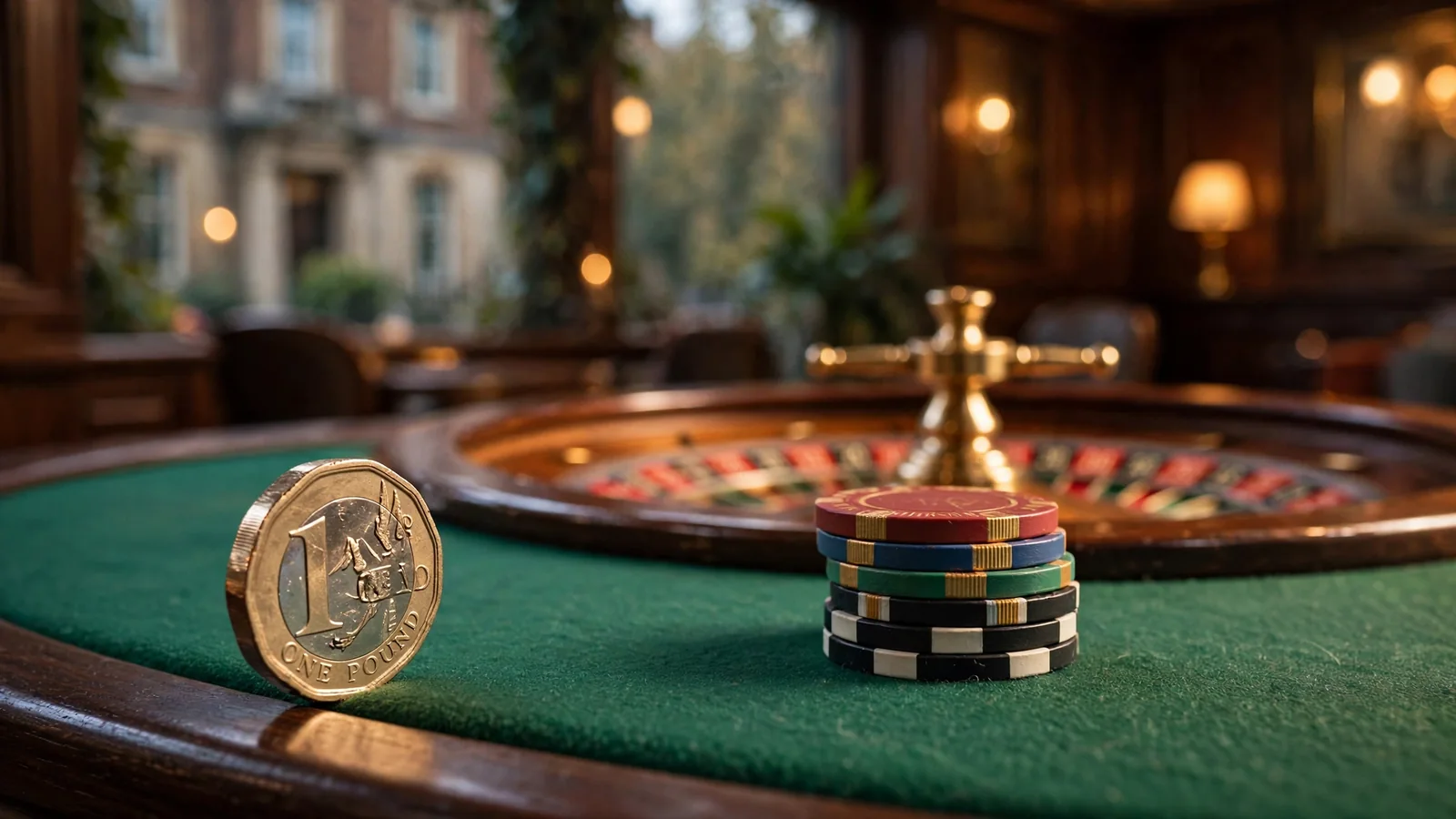
Gibraltar casino licence in the UK: what it means
 Available in GB
A Gibraltar licence identifies a jurisdictional link, but does not by itself establish UKGC regulation, operator location or customer location.

Table of Contents
- What “Gibraltar casino” means in the UK market
- The UK legal position: operator duties and player status
- What a casino site’s licence does—and does not—tell players
- Gibraltar licensing and the limits of the available evidence
- How Gibraltar compares with other offshore jurisdictions
- Licence claims, market access and the Anjouan contrast
- Casino companies, games and the mechanics behind the offer
- Real-money slots and the payment routes around them
- New casino offers: withdrawal terms before the headline bonus
- Regulation, complaints and what happens when a dispute arises
What “Gibraltar casino” means in the UK market
“Gibraltar casino” can describe a site by reference to the jurisdiction named on its licence. It does not, by itself, say that the operator is based in Gibraltar, that its customers are there, or that it is regulated by the UK Gambling Commission. Those are separate questions, easily blurred by a label on a homepage.
In the UK market, the useful distinction is between a casino’s licensing jurisdiction and its regulatory relationship with the UK. A non-UK-regulated casino is an online gambling site operating without oversight from the UK Gambling Commission. Gibraltar is one of several jurisdictions under which such sites may be licensed; Malta, Curaçao and Anjouan are others. The category is about the absence of UKGC oversight, not a single shared business model or a single type of site.
That makes “Gibraltar online casino” a description of a licence association, not a reliable shorthand for “UK-regulated casino”. A Gibraltar licence and a UK Gambling Commission licence are not interchangeable labels. Treating one as evidence of the other confuses the regulator named by the site with the regulator responsible for the British market.
I have seen this confusion arise from presentation as much as from terminology. A footer may display a jurisdiction, while a page title uses “UK casino” language and the rest of the site looks familiar to British customers. The design does not settle the licensing question. Nor does a site’s use of English, sterling, or recognisable casino terminology tell a reader which authority oversees it. Those details may make an offer feel local; they do not change what “Gibraltar-licensed” means.
There is also a difference between “online casinos in Gibraltar” and casinos licensed in Gibraltar. The first phrase can sound as if it describes where a company operates from or where its customers are located. The second points to the jurisdiction associated with the licence. Without checking what a site means by its own wording, those descriptions can be mistaken for one another. The place named in a licence is not automatically the place where a company is incorporated, where its systems are run, or where a customer is playing.
Curaçao Casino Licence in the UK: What It Means
The same care applies to phrases such as “Gibraltar casino sites” or “Gibraltar casinos online”. They may group sites by a licensing claim, but they do not establish that every site in the group has the same operator, terms, games or regulatory status. “Best” and “top” are even less precise: they are judgements, not licence categories. A ranking can put several sites beside one another without making their legal or regulatory arrangements equivalent.
This distinction matters because the word “licensed” sounds complete. In practice, it only answers a limited question: which jurisdiction does the site say has issued its licence? It does not mean that every regulator applies the same rules, or that one jurisdiction’s licence carries the authority of another. A Gibraltar reference should therefore be read as a Gibraltar reference, not as a general badge of UK approval.
The broader label, non-UK-regulated casino, is useful precisely because it avoids pretending that all sites outside UKGC oversight are alike. They may be associated with different licensing jurisdictions, including Gibraltar, Malta, Curaçao or Anjouan. Naming that group does not rank those jurisdictions or describe the details of their individual licensing systems. It simply identifies the relationship that matters for this terminology: the site is not under UK Gambling Commission oversight.
A reader looking at a Gibraltar-branded casino is therefore dealing with two separate descriptions. One identifies the jurisdiction linked to the site’s licence; the other identifies whether the site is regulated by the UK Gambling Commission. The first cannot stand in for the second. Keeping those labels apart is a small but important piece of accuracy—especially when a site’s wording makes the distinction easy to miss.
No equivalence implied.
Recommended online casinos
- NightLuckBonus: Welcome Pack + 805% Up To 6400€ + 280 FS · Payout speed: 1-3 business days
- SlotoSportBonus: 500% up to £ 10 200+ 777 FS · Payout speed: 1-3 business days
- SpinFormulaBonus: 550% Up To £15,000 + 550 FS · Payout speed: 1-3 business days
- x3betBonus: Welcome Pack 100% Up to £1.000 + 200 Free Spins · Payout speed: 1-3 business days
- Revery PlayBonus: 100% up to€1,000+ 100 FS · Payout speed: 1-3 business days
- ZombillionBonus: Welcome Pack 250% up to £4000 + 200 FS · Payout speed: 1-3 business days
- ChanzeBonus: Slots Welcome Bonus #1 200% up to €500 · Payout speed: 1-3 business days
The UK legal position: operator duties and player status
The legal question around a Gibraltar-facing casino has two separate parts: what the operator must do to serve customers in Great Britain, and whether an individual player commits an offence by using a gambling site licensed elsewhere. Those questions are often collapsed into one. They should not be.
The Gambling Act 2005 focuses on the businesses providing services into the UK market, rather than the individual players using those services.
The Gambling Act 2005 is directed at the businesses supplying gambling services into the UK market. For operators serving customers in Great Britain, the rule turns on where the customers are, not where the company is based: a UK Gambling Commission licence is required regardless of the operator’s home jurisdiction. A company does not avoid that duty simply by running its website from Gibraltar or holding a licence there.
That is the operator’s position. It is not the same as saying that a player using a site without a UKGC licence is committing a criminal offence. The Act’s focus is the provision of gambling services, rather than prosecuting individual customers for placing bets. UK law also contains no express ban on British citizens using gambling services licensed in other countries. In particular, playing on an unlicensed site does not, by itself, make the player guilty of a criminal offence under UK law.
I find this distinction useful because the words “illegal casino” can make it sound as though the same legal consequence applies to the business and every person who uses its service. It does not. The operator may be acting without the licence required to serve the British market; the player’s position is different. That difference is about who the law places the relevant obligation on, not an endorsement of the operator or a statement that its service is authorised in Great Britain.
The market-facing obligation
The licensing duty follows the activity of supplying gambling to Great Britain. A Gibraltar company, a company incorporated elsewhere, or a business operating from outside the country is still subject to the UKGC requirement if it serves customers in Great Britain. The place shown on a company profile or a licence label does not replace the market-facing test.
Casinos Without a UK Licence: What It Means
This is why “Gibraltar licensed” and “licensed to serve Great Britain” are not interchangeable descriptions. The first identifies a licensing claim connected with Gibraltar. The second concerns permission to offer gambling services in the British market under UK rules. A foreign licence does not, on its own, meet the UKGC requirement.
That does not mean every site with a foreign licence has the same status or operates in the same way. It means only that a licence from another jurisdiction cannot be treated as the UKGC licence required for an operator serving Great Britain. The relevant legal distinction is straightforward, even when a site’s branding, company details and licensing language make it less obvious in practice.
The player’s position
For an individual, the narrow legal point is that UK law does not specifically forbid British citizens from using gambling services licensed overseas, and a player does not commit a criminal offence merely by gambling on a site that lacks a UK licence. This is not the same as saying that online gambling is legally authorised in Britain wherever a website can be accessed. The operator’s duty remains in place.
I would keep three ideas separate:
- An operator serving Great Britain needs the relevant UK Gambling Commission licence.
- A licence issued elsewhere is not a substitute for that UKGC authorisation.
- The player is not made criminally liable under UK law simply for using an unlicensed gambling site.
The distinction matters in articles and in site terms alike. A claim that a foreign licence makes a casino “legal in the UK” confuses the operator’s obligation with the player’s position. The reverse claim—that a customer automatically commits an offence by using an unlicensed site—also overstates the position. Neither statement captures the separation between supplying a service and using one.
The word “legal” is doing too much work when it is used without saying whose conduct is being discussed. For an operator, the question is whether it holds the UKGC licence required to serve customers in Great Britain. For a player, the specified point is that using a site without that licence is not itself a criminal offence under UK law. Those are related questions, but they are not mirror images.
A Gibraltar licence does not erase the operator’s UK-facing duty; equally, the absence of a UKGC licence does not turn the player’s act into a criminal offence. Two different legal positions.
Do
- Distinguish between operator obligations and player status
- Verify if an operator holds a UKGC licence for the British market
- Treat a foreign licence as a jurisdictional claim only
Don’t
- Assume a foreign licence makes a casino “legal in the UK”
- Believe that using an unlicensed site is a criminal offence for the player
- Treat a Gibraltar licence as a substitute for UKGC authorisation
What a casino site’s licence does—and does not—tell players
A licence badge is a starting point, not a summary of the protections attached to an account. When I assess what a casino’s licence means in practice, I separate the place named on the badge from the rules and remedies available to customers. A Gibraltar label, on its own, does not show that a site is regulated by the UK Gambling Commission or that UK safeguards apply.
That distinction can get lost in phrases such as “best online casino”. The wording is promotional; the useful question is what happens when a player wants to set limits, exclude themselves, protect personal information or challenge a decision. A licence can identify a regulatory framework, but it does not automatically make that framework equivalent to the UK system.
Safeguards are not interchangeable
UKGC-licensed operators are subject to requirements that do not necessarily carry over to non UK regulated casinos. Those sites may apply less demanding standards for responsible gambling and data protection. “Player protection” can sound like a single package, but in practice it depends on the rules the operator must follow and the tools it is required to make available.
For someone comparing a casino site in Gibraltar with a UK-licensed site, the practical difference is not resolved by the word “licensed”. The label does not establish that the same responsible-gambling measures are mandatory, or that a customer can rely on the same regulatory oversight. I would treat claims about safety as questions to verify, not as a consequence of seeing a badge.
The same applies to self-exclusion and account controls. Players at non UK regulated casinos do not have access to the UK’s mandatory responsible-gambling tools. Casinos not on GamStop are outside that self-exclusion scheme; a UK exclusion should not be assumed to block access to them. That matters because a tool only works as a safeguard within the services it covers.
Not the same system.
Personal information and complaints
Data protection is another area where the licence label cannot answer every practical question. Non UK regulated casinos may operate under less stringent data-protection rules than UKGC-licensed operators. That does not establish how a particular site handles information; it means the UK regulatory standard should not be presumed from a foreign licence alone. The operator’s privacy terms and the rules that apply to it still matter.
Players at non-UK regulated casinos do not have access to mandatory UK responsible-gambling tools or the GamStop self-exclusion scheme.
The route for resolving a problem also differs. Someone using a non UK regulated casino does not gain access to the UK’s Financial Ombudsman Service for a gambling dispute, nor should they expect to use the UK Gambling Commission’s complaints procedure as though the operator were within its system. A foreign licence is not a substitute for those UK routes.
This is why “licensed” and “protected in the same way” are not synonyms. A licence can indicate that an operator falls under a regulator somewhere; it does not prove that UK remedies, tools or standards follow the player across borders. The distinction is easy to miss when a site presents a badge prominently and the conditions sit elsewhere.
When Gibraltar casino sites are compared, the most reliable reading is a narrow one: the licence claim tells something about the site’s stated regulatory setting. It does not, by itself, settle what safeguards apply to a British customer, how personal data is handled, or which body can help if a dispute arises. Those are separate questions, and the answers depend on the framework governing the operator—not on the confidence of its marketing.
Gibraltar licensing and the limits of the available evidence
A Gibraltar licence and permission to serve customers in Great Britain answer different questions. The first identifies a licensing jurisdiction associated with a casino’s operation. The second depends on the rules for supplying gambling services in Great Britain. Operators serving customers there need a UK Gambling Commission licence, wherever the business is based. A Gibraltar connection does not replace that requirement.
Merkur Casino Online UK: Rules and Account Guide
That distinction can get blurred by the wording on a casino website. “Gibraltar licensed” may sound like a complete statement about where a site can operate, but it names a jurisdiction, not every market in which the operator is authorised to offer gambling. I have seen licensing language treated as a shorthand for broader legitimacy. It is not that. The label has a narrower job.
Gibraltar is one of the jurisdictions associated with non-UK-regulated casinos, alongside Malta, Curaçao and Anjouan. That places it within a recognised part of the online gambling market; it does not make a Gibraltar-licensed site UKGC-regulated. The two descriptions should not be collapsed into one. A site can be connected to Gibraltar and still sit outside the UK Gambling Commission’s system.
The practical test is therefore not whether a casino calls itself a Gibraltar online casino, or whether its terms mention a Gibraltar licence. The relevant distinction is whether the operator holds the licence required to serve Great Britain. Location and market permission are separate. The company’s base does not alter the requirement for operators serving customers in Great Britain.
This is where a seemingly precise licence claim can leave a gap. It may tell something about the operator’s licensing basis, but it does not, by itself, establish that the operator is authorised for the British market. “Licensed” is a broad word in marketing copy. The jurisdiction attached to it matters, and so does the market being served.
I would also avoid reading more into a Gibraltar reference than it says. The phrase alone does not identify the operator’s UKGC status, nor does it show that the site is covered by UK regulation. Those are separate questions, not details that can be settled by the word “Gibraltar”. The same caution applies to references to an online gambling licence: the term needs a jurisdiction attached, and it should not be mistaken for permission to operate in every country.
Market Access
A Gibraltar licence is a jurisdictional label, not a substitute for the UK Gambling Commission licence required to serve Great Britain.
For a British-facing site, the distinction is decisive at the level of market access. A Gibraltar licence is not a substitute for the UK Gambling Commission licence required of operators serving Great Britain. Conversely, the existence of a Gibraltar connection does not itself establish whether a particular operator has the necessary UK authorisation. The two claims concern different things.
The wording is easy to skim past, especially when a site presents its licensing details beside brand assurances and account information. I have found it useful to separate the claim into its parts: which jurisdiction is named, and whether the operator holds the licence required for the market it serves. That keeps the Gibraltar label in proportion. A jurisdiction, not a passport.
How Gibraltar compares with other offshore jurisdictions
Gibraltar is one of several jurisdictions associated with non-UK-regulated casinos. Malta, Curaçao and Anjouan also appear in that broad market picture. The names are useful for describing where a casino’s licence is associated, but they do not form a league table. I would not treat the order in which jurisdictions are mentioned as a ranking of quality, safety or access for British customers.
That distinction matters when comparing sites marketed as Gibraltar casinos. The label identifies a jurisdictional connection; it does not, by itself, tell us how a particular operator is supervised, which customers it may accept or what recourse is available if a dispute arises. Those questions depend on the operator and the rules applying to its activity. A jurisdiction name is not a complete account of the offer.
In practice, the phrase “top Gibraltar casino sites” can make the comparison sound simpler than it is. A list built around licence location alone may place unlike operators side by side without showing what the label actually establishes. I have seen this sort of shorthand do a lot of work in marketing: it turns one detail into a general impression. That impression is not evidence of a wider advantage.
The same caution applies across the other names. Malta, Curaçao and Anjouan are examples of jurisdictions associated with non-UK-regulated casinos, just as Gibraltar is. That shared category does not mean their licences have identical terms or that a rule attached to one jurisdiction applies to another. Equally, the presence of a jurisdiction in a comparison does not establish that every casino associated with it can serve customers in every market.
Anjouan provides a clear reason to keep those distinctions in view. An Anjouan licence does not authorise operation in the United Kingdom or in other markets where it is restricted. That is a specific limit attached to that licence; it should not be turned into a general claim about Gibraltar, Malta or Curaçao. Nor should the contrast be reversed into an assumption that a Gibraltar connection proves permission to serve British customers.
So a comparison between Gibraltar and other jurisdictions is most useful when it stays narrow. It can identify the different places associated with non-UK-regulated casinos and flag that market access may differ. It cannot, on its own, settle whether a given site is suitable, authorised for a particular market or better than another. The jurisdiction label is a starting point, not the verdict.
Jackpot Mobile Casinos in the UK: How Slots Work
Licence claims, market access and the Anjouan contrast
A foreign licence is a claim about an operator’s regulatory status in a particular jurisdiction. It is not a passport for every country. I have seen the distinction get blurred in site copy: a licence badge is placed beside a list of accepted countries, and the layout invites the reader to treat the two as one approval. They are separate questions.
For a British customer, the presence of a Gibraltar licence does not by itself establish that a site is authorised to serve Great Britain. Nor does the label “Gibraltar online casino” settle what markets the operator may serve. The name identifies a licensing connection; it does not prove universal market access. I would not infer permission from a badge or from the fact that an account can be opened.
The same caution applies in the other direction. A restriction written into one jurisdiction’s terms should not be transferred to another licence without evidence. Anjouan provides a clear example of why the distinction matters: an Anjouan licence does not authorise an operator to serve the United Kingdom or other listed restricted markets. That is a specific limit attached to that licence, not a rule that can be assumed to apply to Gibraltar.
This is where licence claims need to be read as claims with a scope, rather than as a general quality mark. “Licensed” sounds complete. In practice, it leaves unanswered where the authorisation applies and whether the operator may target customers in a particular market. The wording can be technically accurate while still giving a broader impression than the permission supports.
Anjouan’s stated limits also show that a foreign licence does not automatically bring UK-facing safeguards with it. Anjouan-licensed casinos are not required to integrate GAMSTOP or offer an independent dispute-resolution process comparable to services approved by the UK Gambling Commission. Those conditions belong to the Anjouan example; they should not be presented as Gibraltar rules.
The point is not that every licence works the same way, or that the Gibraltar label means nothing. It is that a licence name alone cannot answer the market-access question. For an online casino with a Gibraltar licence, the claim should be considered separately from any claim that the operator is permitted to serve British customers. A badge is not a border clearance.
Casino companies, games and the mechanics behind the offer
A Gibraltar address in a casino company’s branding does not tell much about the offer itself. The operating company, the games catalogue and the terms governing deposits and withdrawals are separate parts of the arrangement. I learned to read them separately: a familiar name or polished lobby can make an offer feel established without explaining how its cash-out conditions work.
The difference between sites often lies less in the headline than in the rules attached to money moving in and out. Non-UK-regulated casinos may set more lenient deposit and withdrawal policies, which can mean fewer restrictions and faster payouts. That is a possibility, not a feature guaranteed by a Gibraltar connection. The actual terms belong to the individual operator and can matter more than the label on the page.
Non-UK-regulated casinos may offer more lenient deposit and withdrawal policies, but these are determined by the individual operator rather than the jurisdiction.
I would look for whether the withdrawal rules are presented clearly alongside the deposit conditions, and whether the site explains when it can apply checks or limits. A broad claim such as “easy withdrawals” is advertising language; the useful detail is the process and the conditions that govern it. If those are hard to find, the promise does little practical work.
The same distinction applies to games. Book of Dead and Starburst are recognisable slot titles, but naming either one does not establish that a particular site offers it, or that its terms are favourable. A game title is not evidence about a company’s payment policy. Nor does a large-looking game catalogue explain what happens when a balance is withdrawn.
This is where Gibraltar slot sites and the companies behind them can look more alike than their marketing suggests. The lobby is designed to sell choice; the terms define the transaction. In my experience, the wording around withdrawals deserves the same attention as the wording around a welcome offer, because it describes the point at which promotional language becomes an operational decision.
There is no sound basis for treating a group of Gibraltar casino companies as interchangeable or for naming a site as a recommendation without checking its current company identity and terms. The label alone cannot establish who operates the account, what conditions apply, or whether a particular game is available. Keep the claims narrow. Check the actual offer.
Real-money slots and the payment routes around them
For real-money slots on a Gibraltar-branded site, the cashier can reveal more about how the offer works than the game lobby does. A payment option shown at deposit is a funding route, not a promise that the same method will be available when money is taken out. I learned to treat those two stages as separate decisions.
Non-UK-regulated casinos may accept credit cards, e-wallets, bank transfers and cryptocurrencies. Some use alternative payment processors, so the name or route displayed at checkout may not be the one expected from a familiar UK service. The method can also vary between operators; a list of options should not be read as a standard feature of every site.
Crypto deserves particular care in this context. A cryptocurrency deposit can bypass the UK ban on credit-card-funded gambling because it is not a card payment. That describes how the payment route works; it does not establish that the casino is authorised to serve customers in Great Britain. Funding mechanics and market permission are different things.
Mobile billing is less consistently described. A specialist review has reported options where a deposit is charged to a phone bill or deducted from a prepaid mobile balance. That is a report about a particular offer, not evidence that mobile billing is a settled feature across the market. Its availability can depend on the operator and payment arrangements in place.
The practical distinction is simple, but easy to miss in a polished cashier: deposits and withdrawals are not mirror images. An operator may accept a payment route for adding funds without offering it for cashing out. A card, wallet, bank transfer or crypto option at the deposit stage therefore says nothing by itself about the route available later. Check the terms attached to the specific method before treating it as a complete payment cycle.
Payment Risks
A payment method available for deposits does not guarantee that the same route will be available for withdrawals.
That matters more than the label “best real-money casinos” suggests. A smooth deposit screen can make the slot session feel immediate; it cannot settle how the account will be funded at both ends. For me, the useful question is not how many logos sit beside the deposit button, but whether the stated payment conditions explain what happens after the initial transaction. No assumptions.
New casino offers: withdrawal terms before the headline bonus
A welcome offer is a set of conditions, not a cash balance. I have seen the headline figure do its job before the player reaches the terms: it draws attention, while the rules decide what can eventually be withdrawn. With a new Gibraltar casino offer, the first check is what the wagering requirement applies to, and which games count towards it.
A specialist review has reported offshore offers with wagering requirements of 35x or more. That is not a universal condition, and the multiplier alone does not explain the workload. A separate offer described in a specialist review used 40x, but the calculation could cover the bonus and deposit together, the bonus alone, or the bonus and free spins. Those are materially different bases. The offer’s own terms determine which applies; the headline does not.
Expiry rules matter too. A promotion can stop being usable before its wagering is complete, so the clock and the qualifying activity need to be read together. A large-looking bonus with a short expiry may be less useful than a smaller offer with clearer conditions. “Free” is a sales label. The attached rules set the value.
Withdrawal terms deserve the same attention. A promotion may include a cap on what can be cashed out, while identity checks can arise when a withdrawal is requested. Some specialist reviews have reported operators asking for notarised documents or video calls; this is a reported possibility, not a standard feature of every offer. Verification requirements can affect access to funds, so they belong in the decision before a deposit, not after a win.
None of these bonus mechanics establishes whether a casino is authorised to serve Great Britain. The offer and the operator’s market permissions are separate questions. A promotion can be clearly described and still be offered by a site without the required UK operating licence. Read the terms, but do not mistake them for permission.
Regulation, complaints and what happens when a dispute arises
A licence label can look like a route to redress. In practice, the useful question is what the regulator is required to do when a player and operator disagree. Gibraltar casino regulation and Anjouan’s framework should not be treated as interchangeable: the protections described here concern Anjouan-licensed casinos, not Gibraltar.
Under Anjouan’s framework, the authority does not handle, mediate or decide individual player complaints. The operator must respond to a complaint within 30 calendar days, but that response requirement is not the same as independent adjudication. Anjouan-licensed casinos do not provide a dispute-resolution route comparable to the independent services associated with UKGC-approved operators. If the operator rejects a claim, or its reply does not resolve it, there is no equivalent independent channel within that framework to take the case further.
That distinction matters. A deadline for an operator to answer tells little about what happens if the answer is unsatisfactory. The process remains with the business being challenged.
The same gap appears in the treatment of player balances. Anjouan’s rules do not require casinos to keep player funds separate from company money, and they do not mandate audits or random-number-generator testing. A licence therefore does not establish that balances are ring-fenced or that game systems receive those particular checks. If the operator fails, players may rank as unsecured creditors rather than having a guaranteed claim to a separately held balance.
I have seen “licensed” used as if it settled every practical concern. It does not. The terms of the licence, the regulator’s role in disputes and the handling of customer funds are separate questions; a label cannot answer them all. With Anjouan, the stated complaint response period gives a point of contact, not an independent decision or guaranteed recovery.
A narrow safeguard. A real limit.
What happens if I have a dispute with an Anjouan-licensed casino as a UK player?
The operator must respond to a complaint within 30 calendar days, but the Anjouan authority does not mediate or decide player complaints. You also do not get an independent dispute-resolution route comparable to UKGC-approved ADR.
Are sites that are not on GamStop legal for players in the UK to access?
Using a gambling site licensed outside the UK is not, by itself, a criminal offence for a player under UK law. However, operators serving customers in Great Britain are required to hold a UK Gambling Commission licence, and sites outside GamStop are not part of the UKGC self-exclusion scheme.
What are non-UK-regulated casinos?
They are online gambling sites that operate without oversight from the UK Gambling Commission. They may be licensed in jurisdictions such as Gibraltar, Malta, Curaçao or Anjouan.
Are Anjouan-licensed casinos safe and fair?
An Anjouan licence does not guarantee independent RNG testing, audits or segregation of player funds. If an operator fails, players may be unsecured creditors, so the licence alone is not assurance that a casino is safe or fair.
What is the biggest risk of playing at a non-UK-regulated casino?
A major risk is having limited recourse if a dispute arises or the operator fails: there may be no comparable independent dispute-resolution route, and player funds may not be segregated. Players also lose access to UK protections such as mandatory responsible-gambling tools.
Published by the Xtraspin Casino team.